
Learning Center
Understand your jewelry. Choose with confidence.
Forty-nine short, sourced video lessons from the Aydins workshop. One idea per video. Save a confusing shopping decision for later; watch the one you need now.
Topic 1 of 5
Ring Fit & Care
How a ring sizes, feels, holds up, and stays clean. If you are shopping a wedding band or a daily ring, start here.
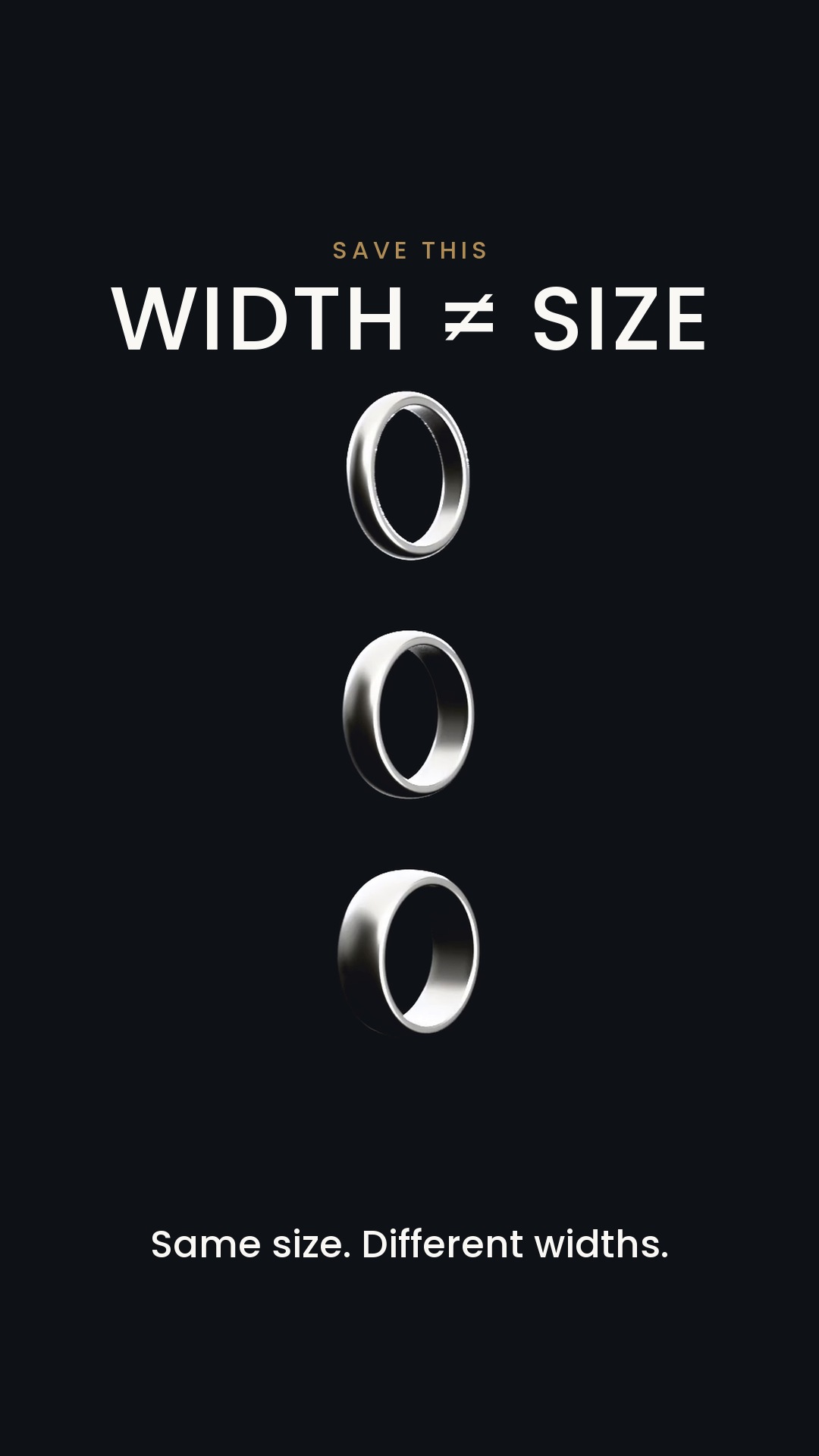
Ring width is not ring size.
Why a wider band at your size looks and fits different, and how to compare the two.
Why two rings in your size can feel different.
Comfort fit vs flat inside, and how band width changes how snug the same size feels.
Scratch-resistant does not mean unbreakable.
Hardness and toughness are two different properties. Why tungsten resists scratches but can crack on impact.
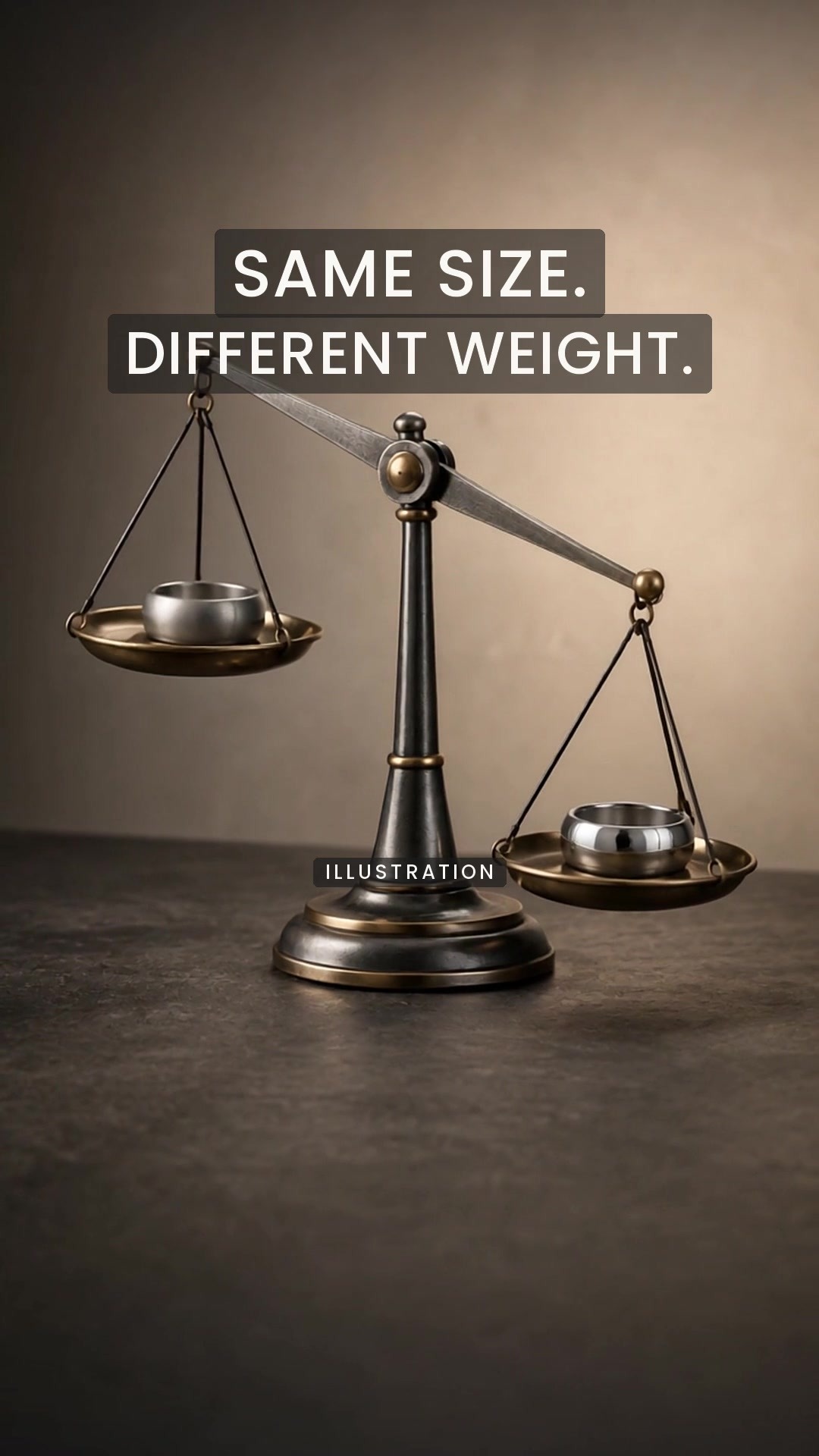
Same size, different weight.
Tungsten carbide is roughly three times as dense as titanium. Choose how a ring feels, not just how it looks.
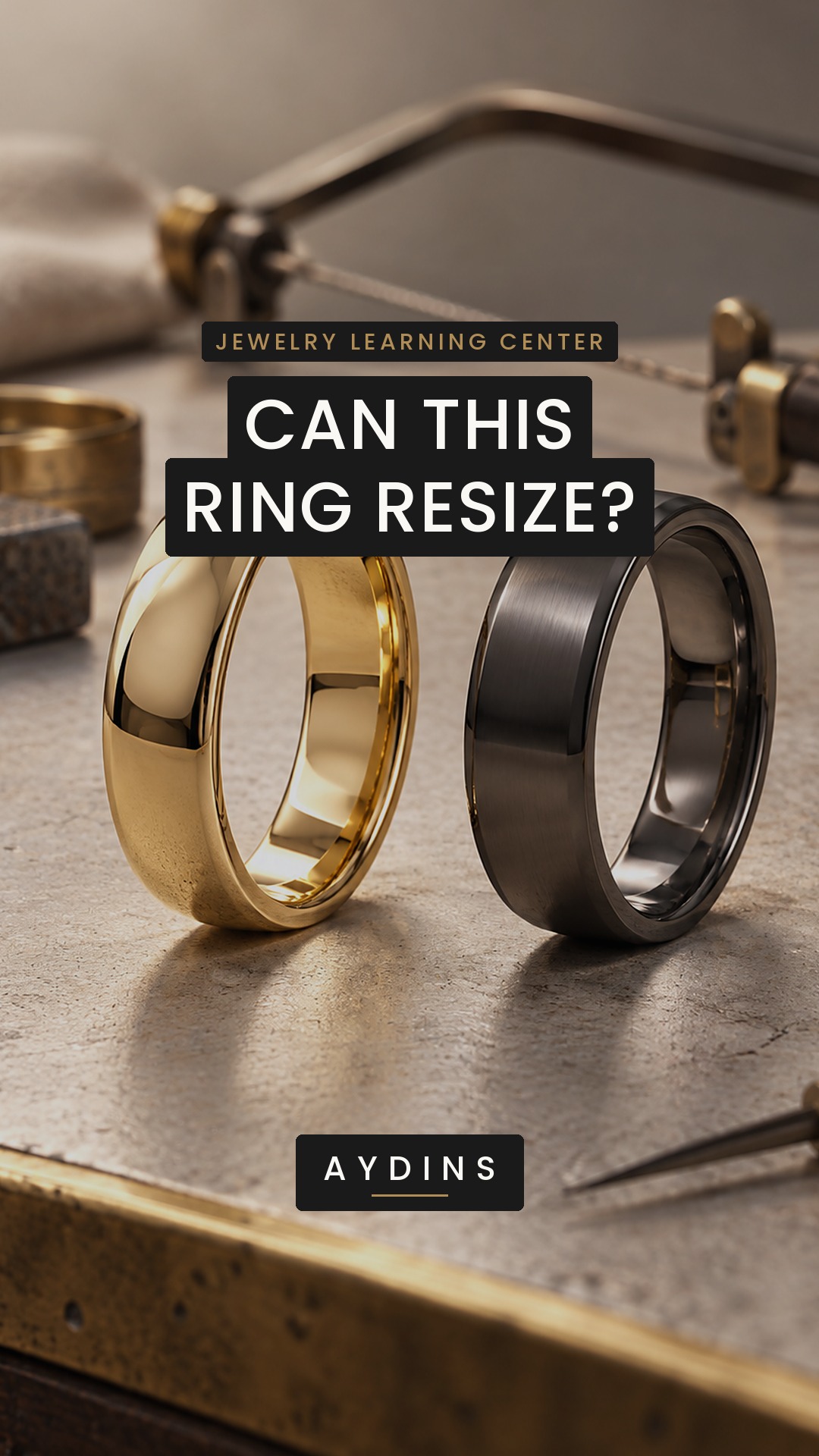
Can this ring actually be resized?
The metal and the design both matter. What can limit sizing options.
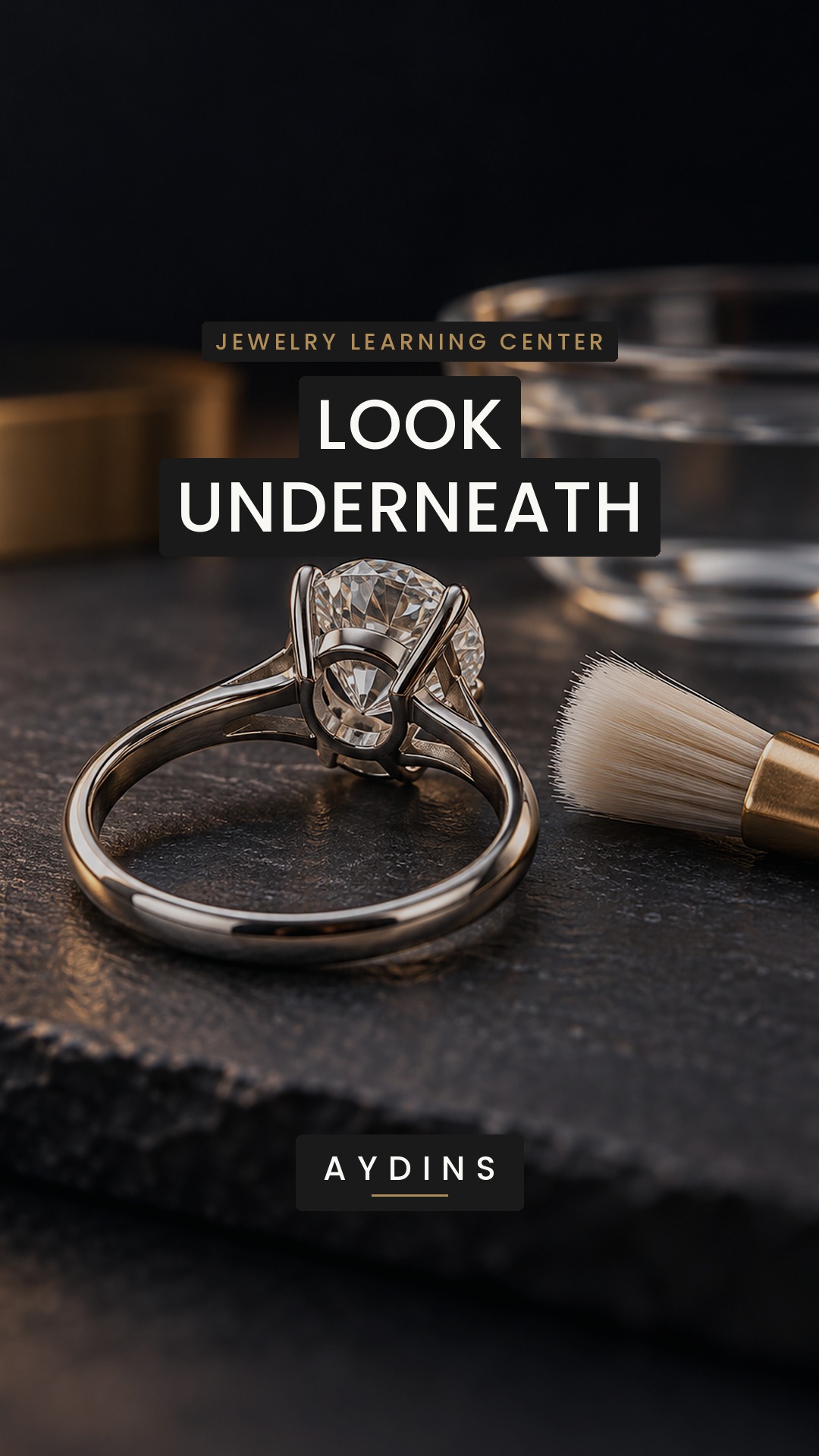
The hidden side of a dull diamond.
Oil and buildup collect behind the stone. A gentle routine for suitable rings.
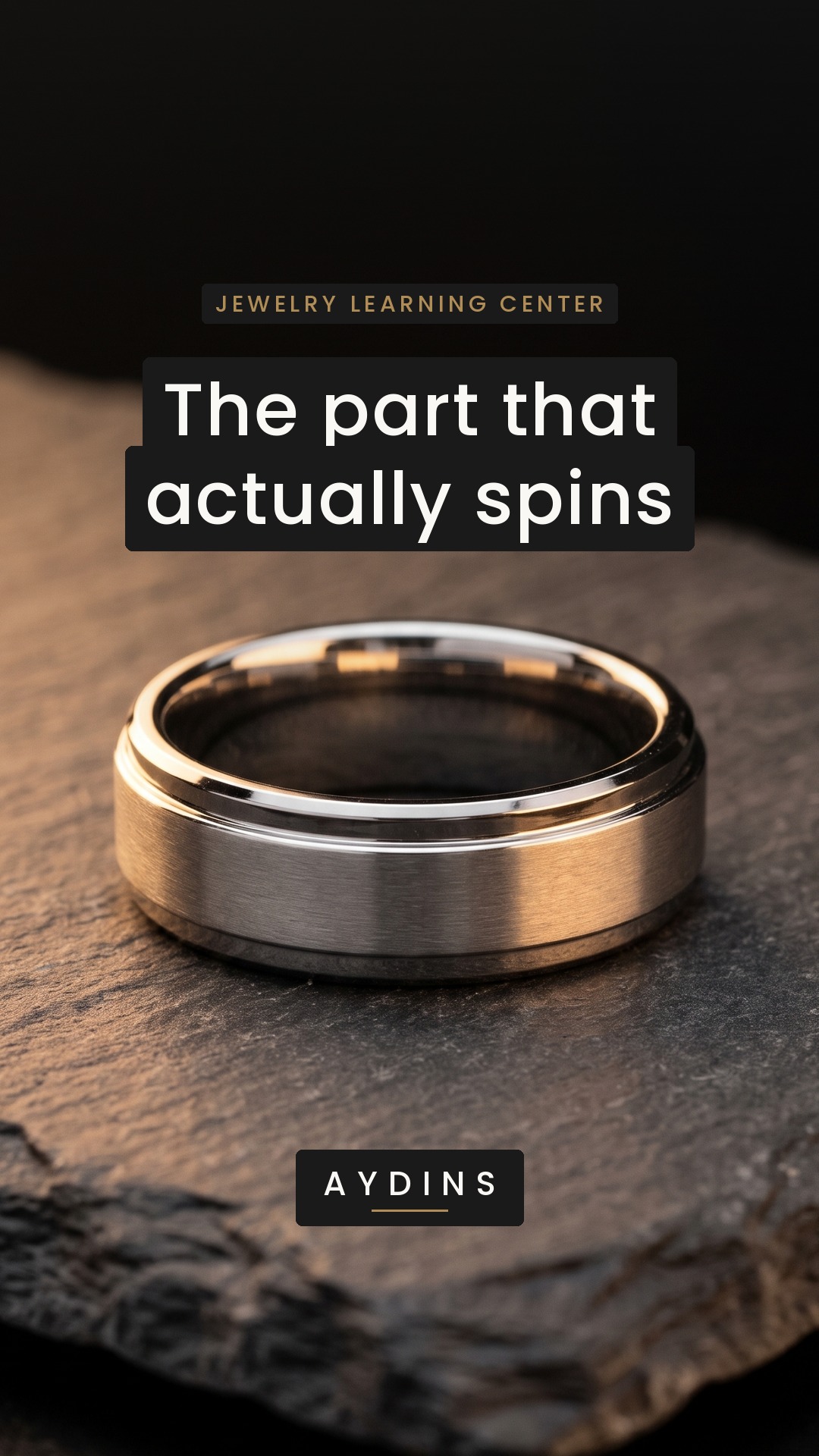
How a spinner ring actually moves.
One band turns, the base stays put. Three checks before you choose a spinner.
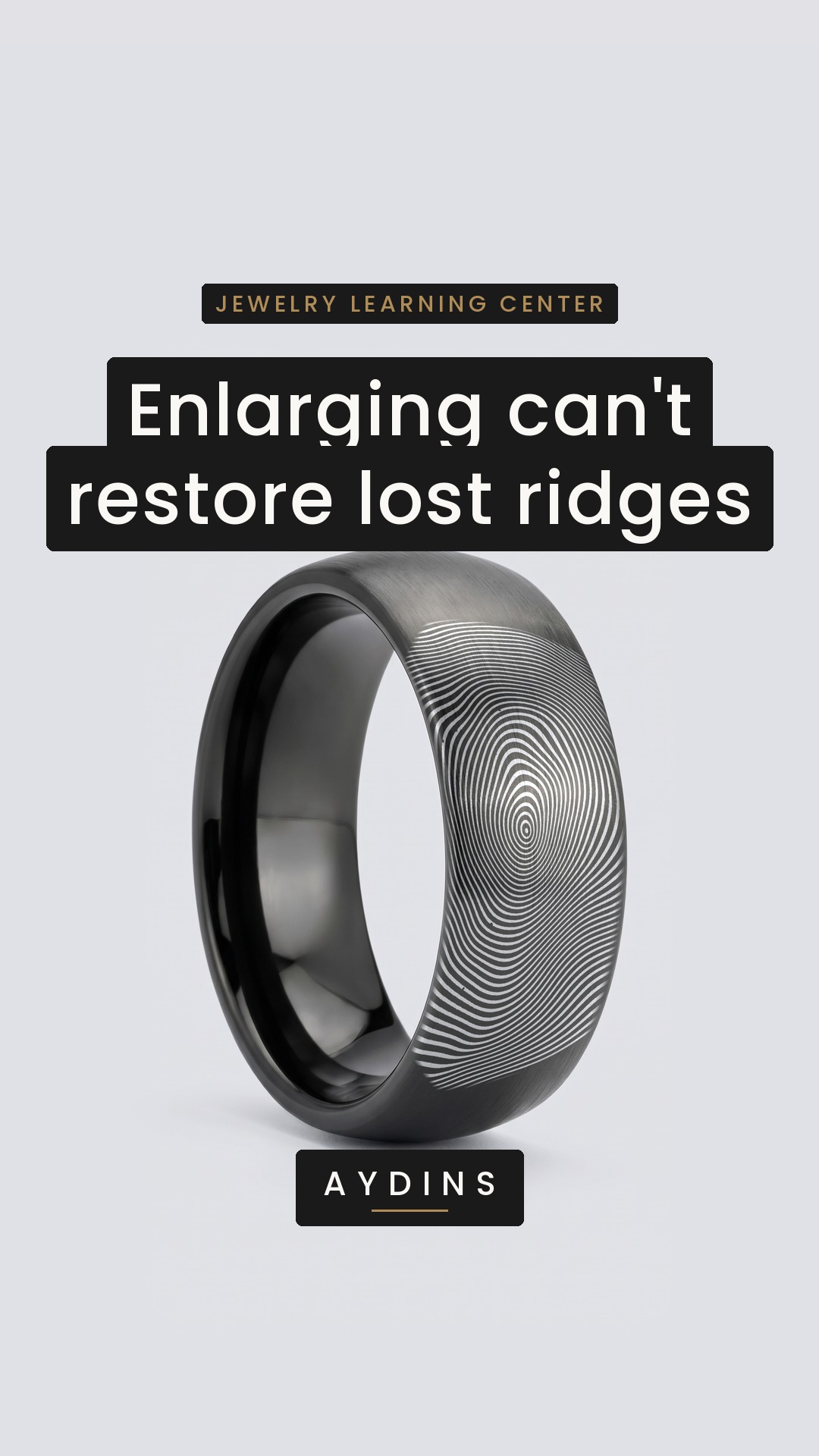
The fingerprint image matters.
Enlarging cannot restore lost ridges. Start with a clear print on a plain background.
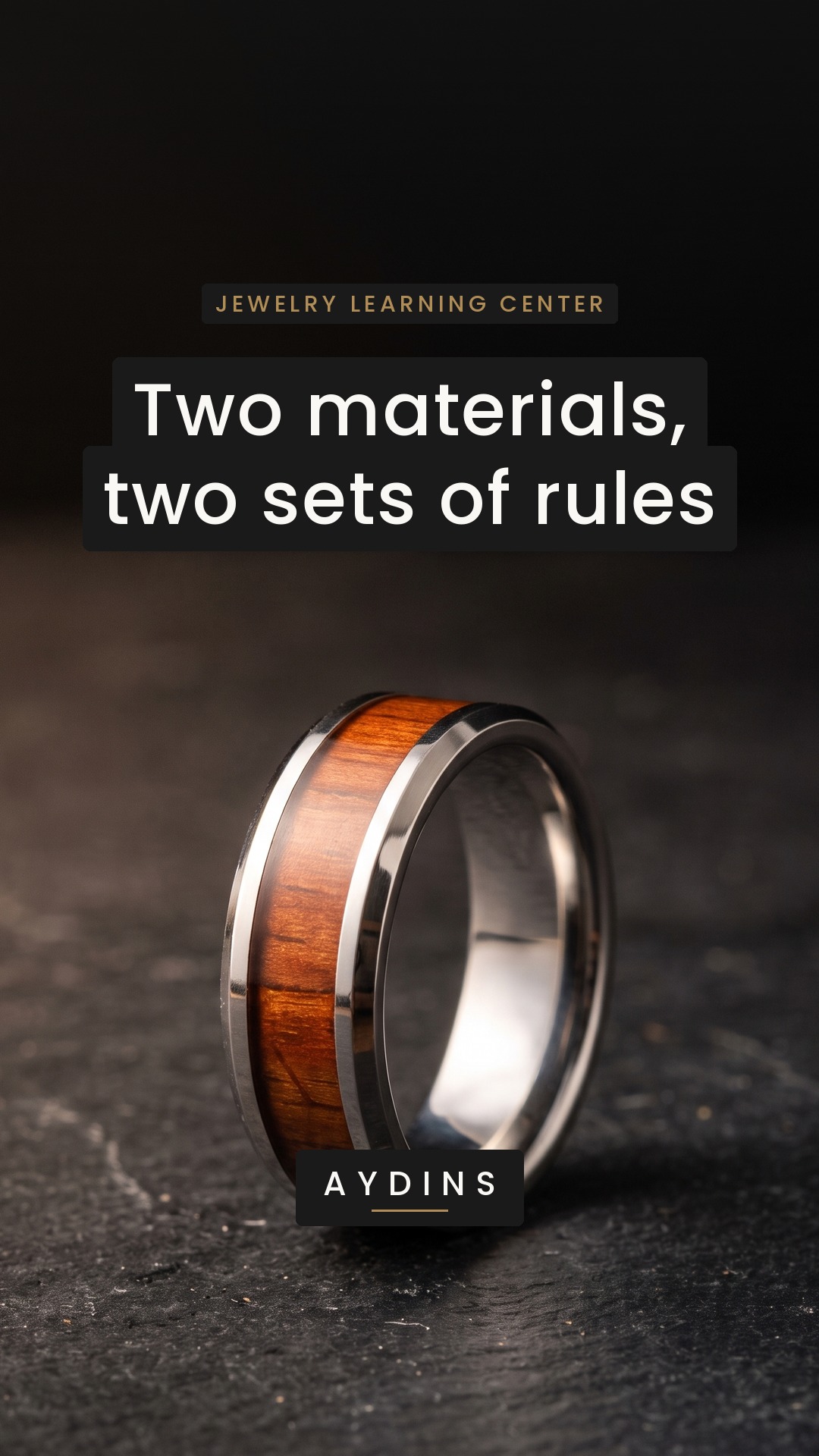
A wood-inlay ring has more than one care requirement.
Brief water is fine; skip soaking, ultrasonic cleaners, harsh chemicals and strong sun.
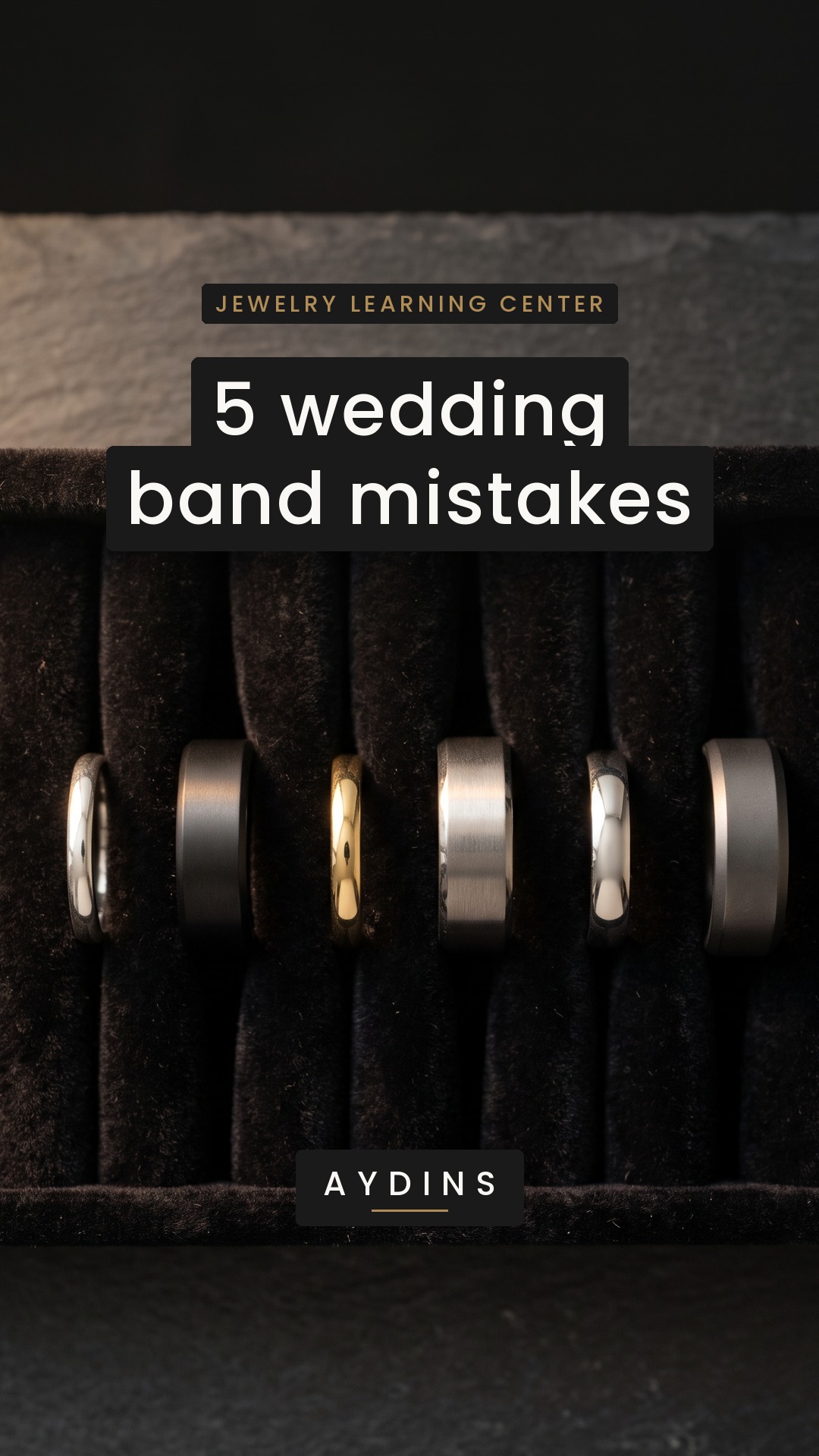
Five wedding band shopping mistakes.
Cold hands, the wrong hand, width, metal and engraving: five quick checks.
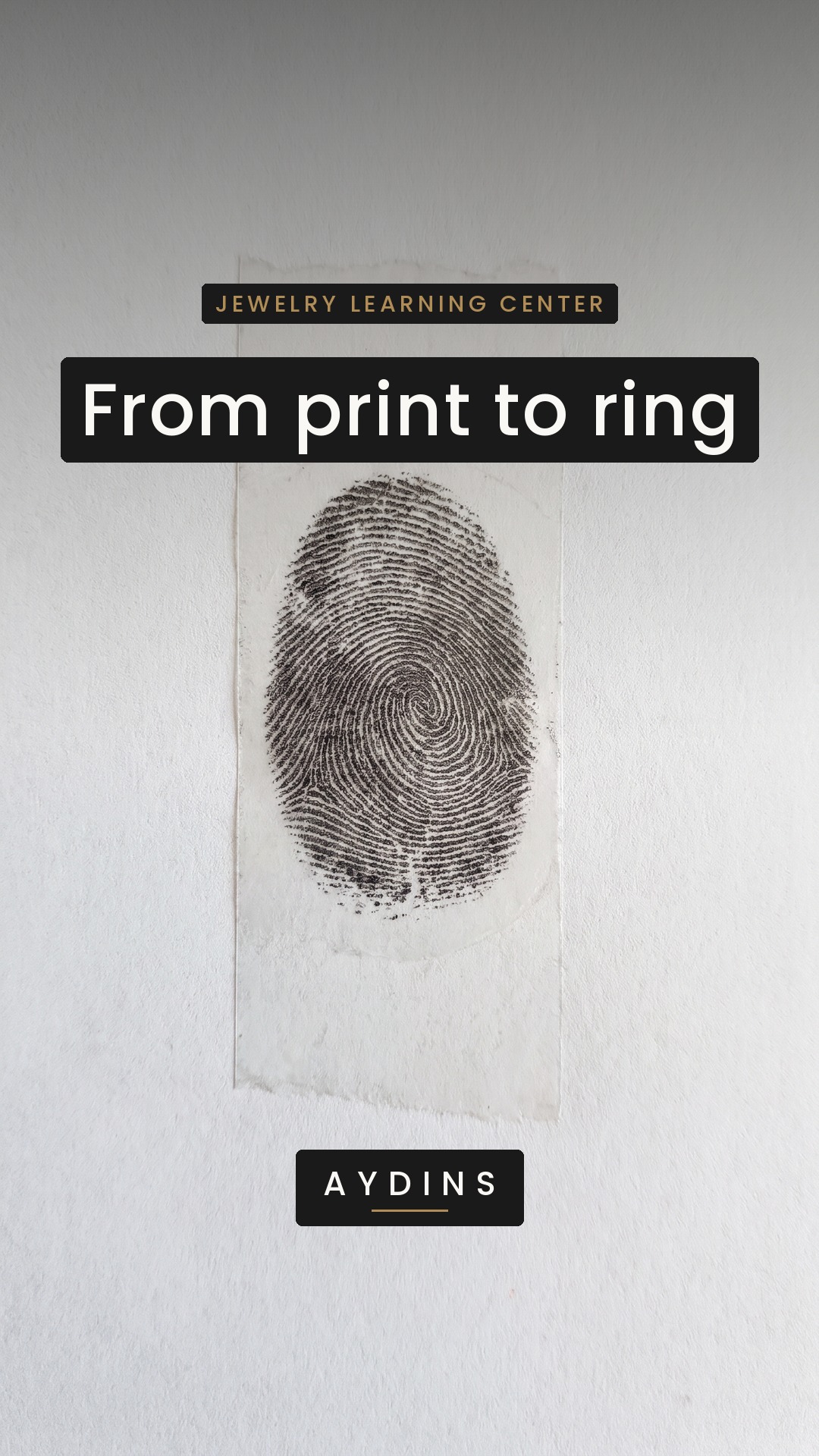
How fingerprint engraving works.
Capture, photograph, upload, approve the proof. Nothing is engraved before you approve.
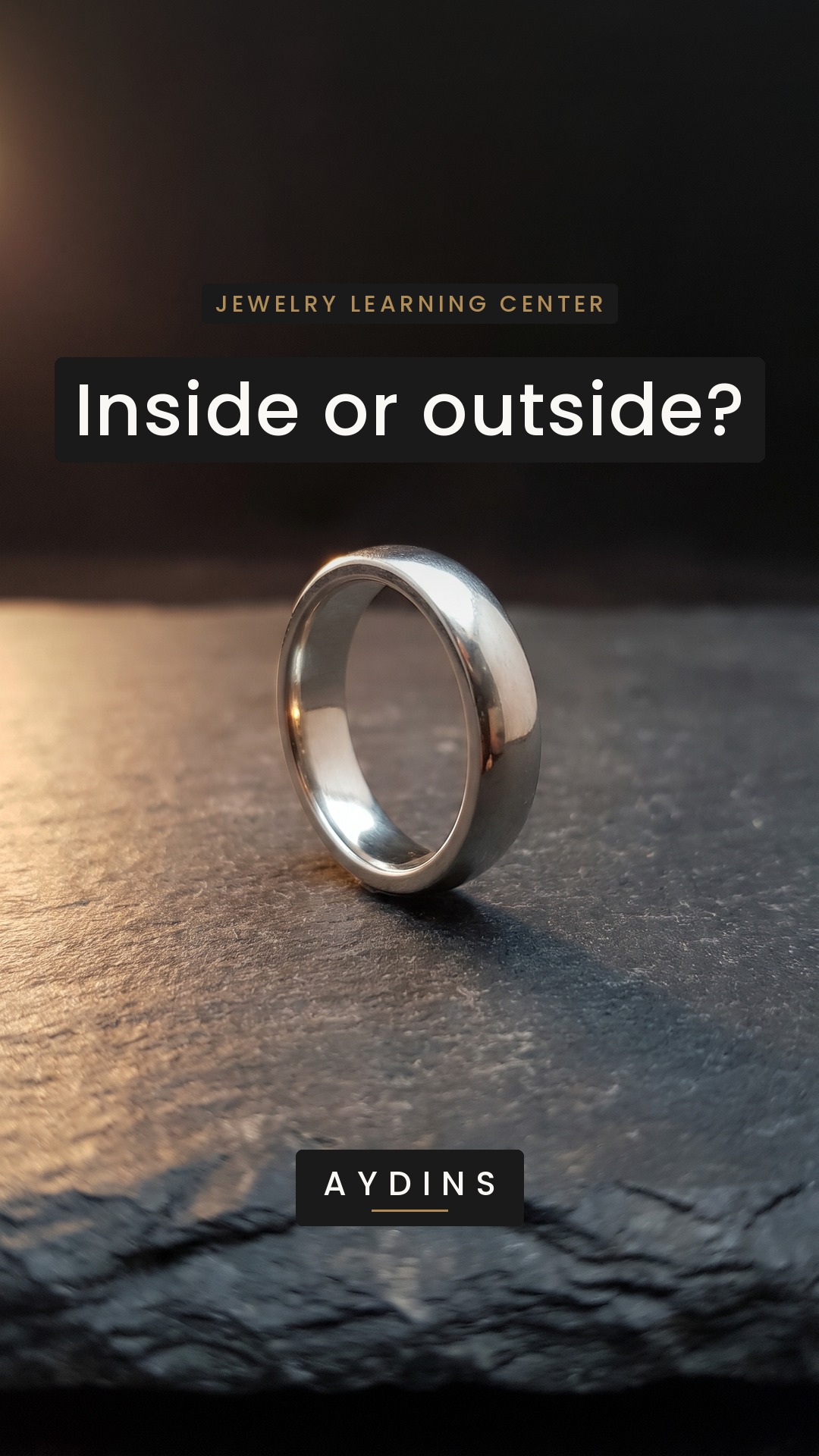
Inside or outside engraving?
Inside is private, outside is the statement. Not every ring offers both.
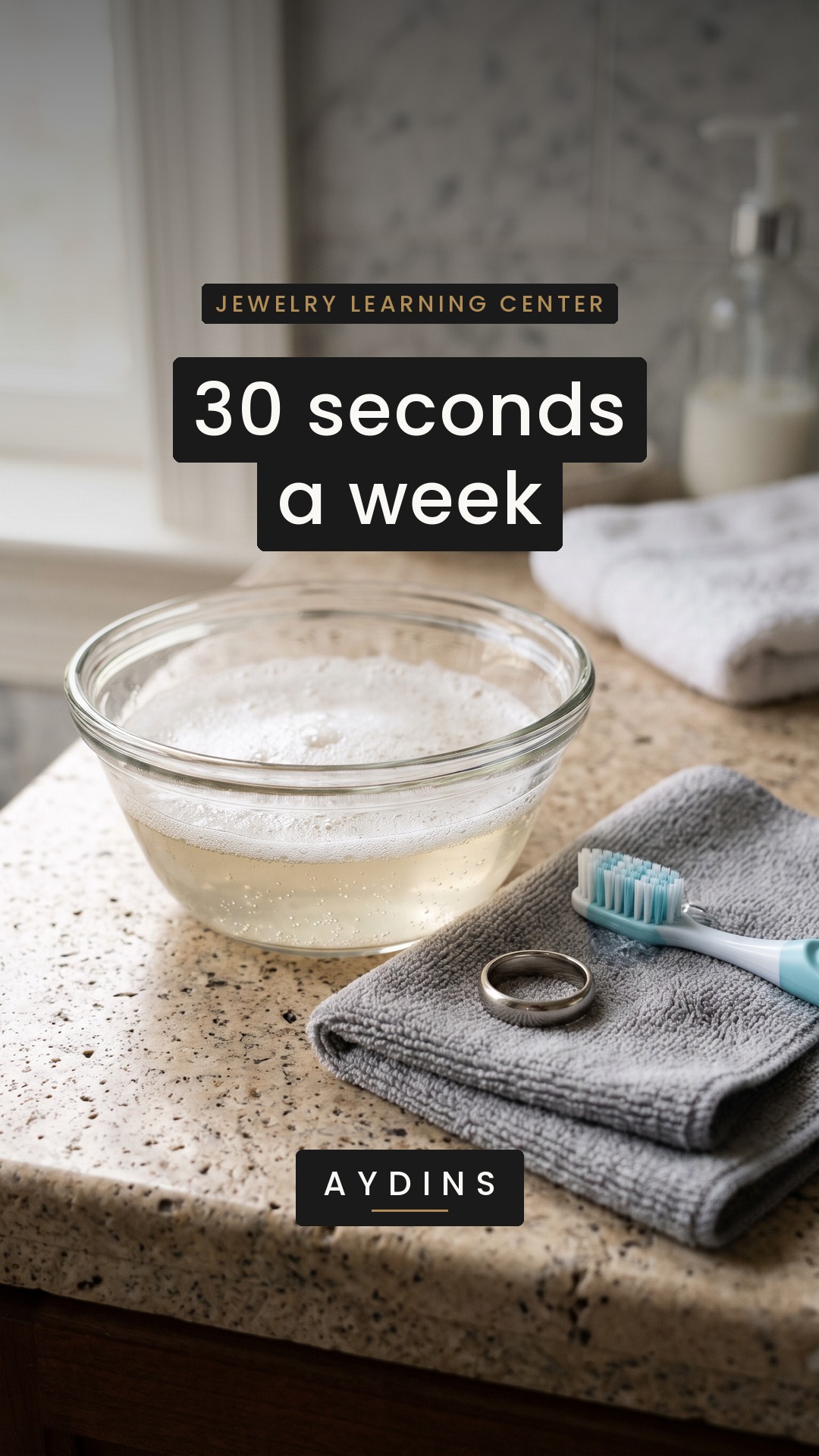
Ring care in thirty seconds a week.
Warm water, dish soap, a soft brush. When to take it off, by material.
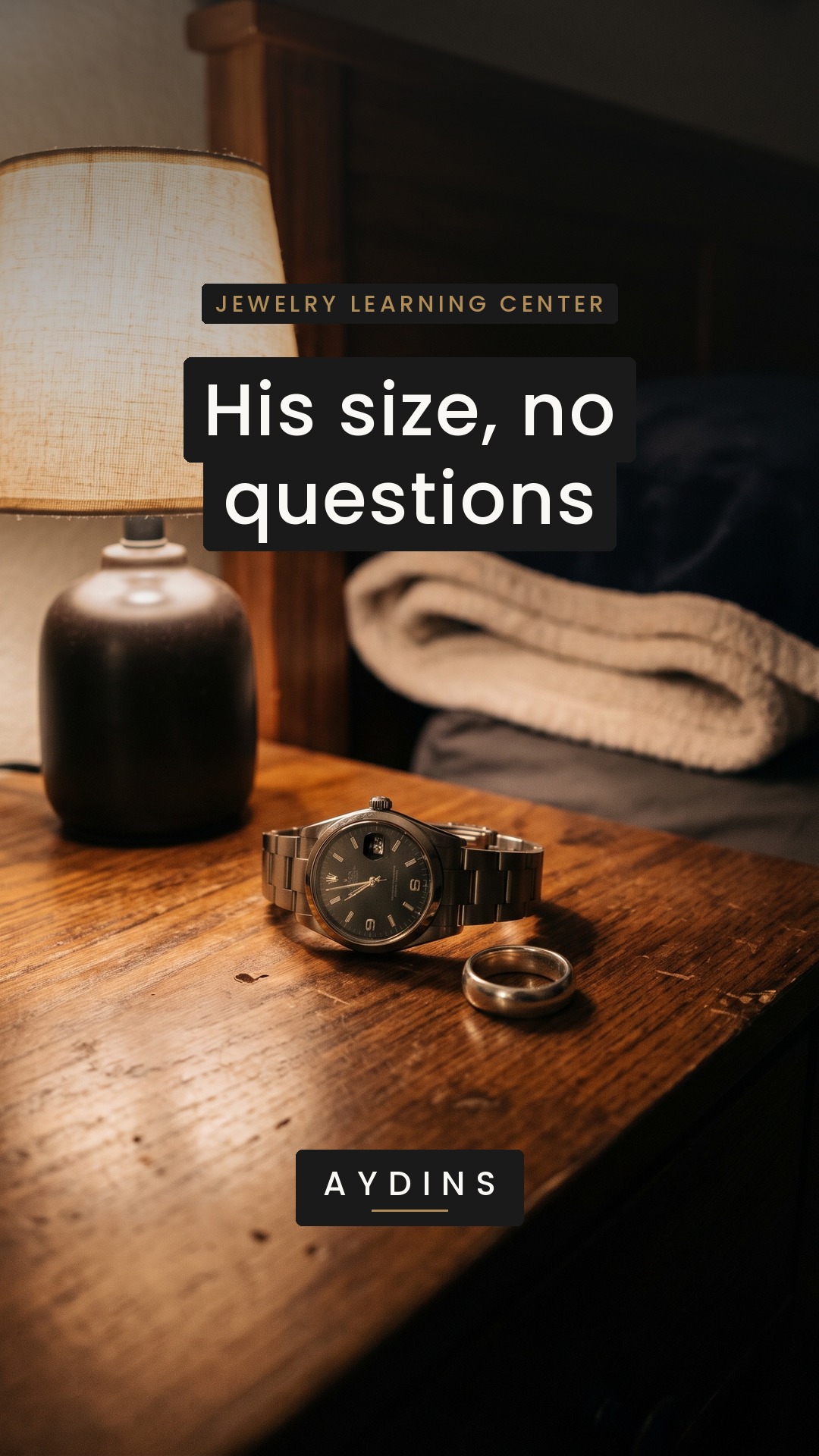
Find his ring size without asking.
Borrow a ring he wears, measure the inside, check the width.
Topic 2 of 5
Metals & Finishes
What a karat number actually counts, plated versus filled versus vermeil, why real silver turns dark, and what is behind Damascus, meteorite, carbon fiber, ceramic, gunmetal and signet rings.
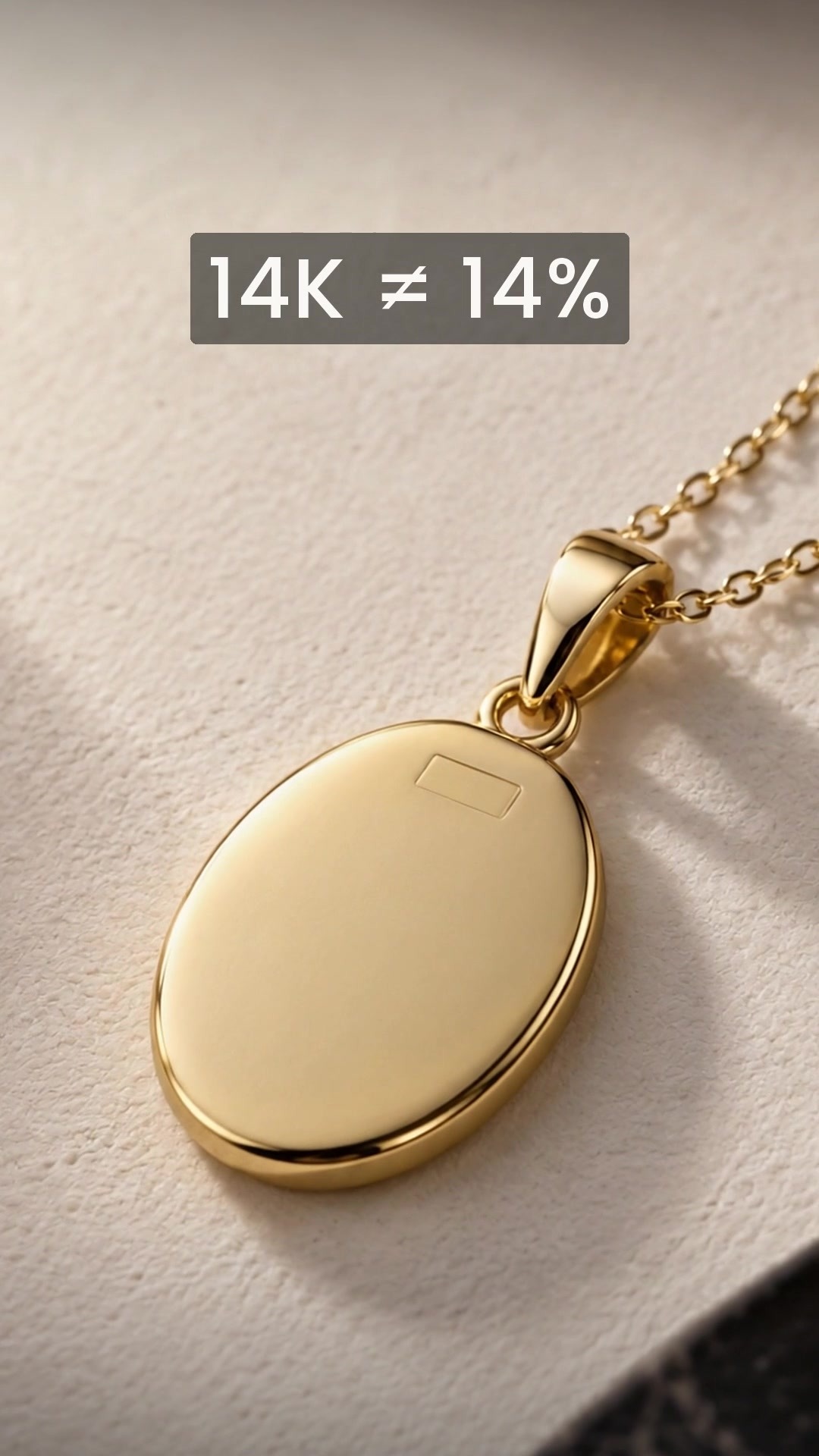
10K vs 14K vs 18K gold.
Karat counts gold out of 24. See what the stamp actually means before you compare.
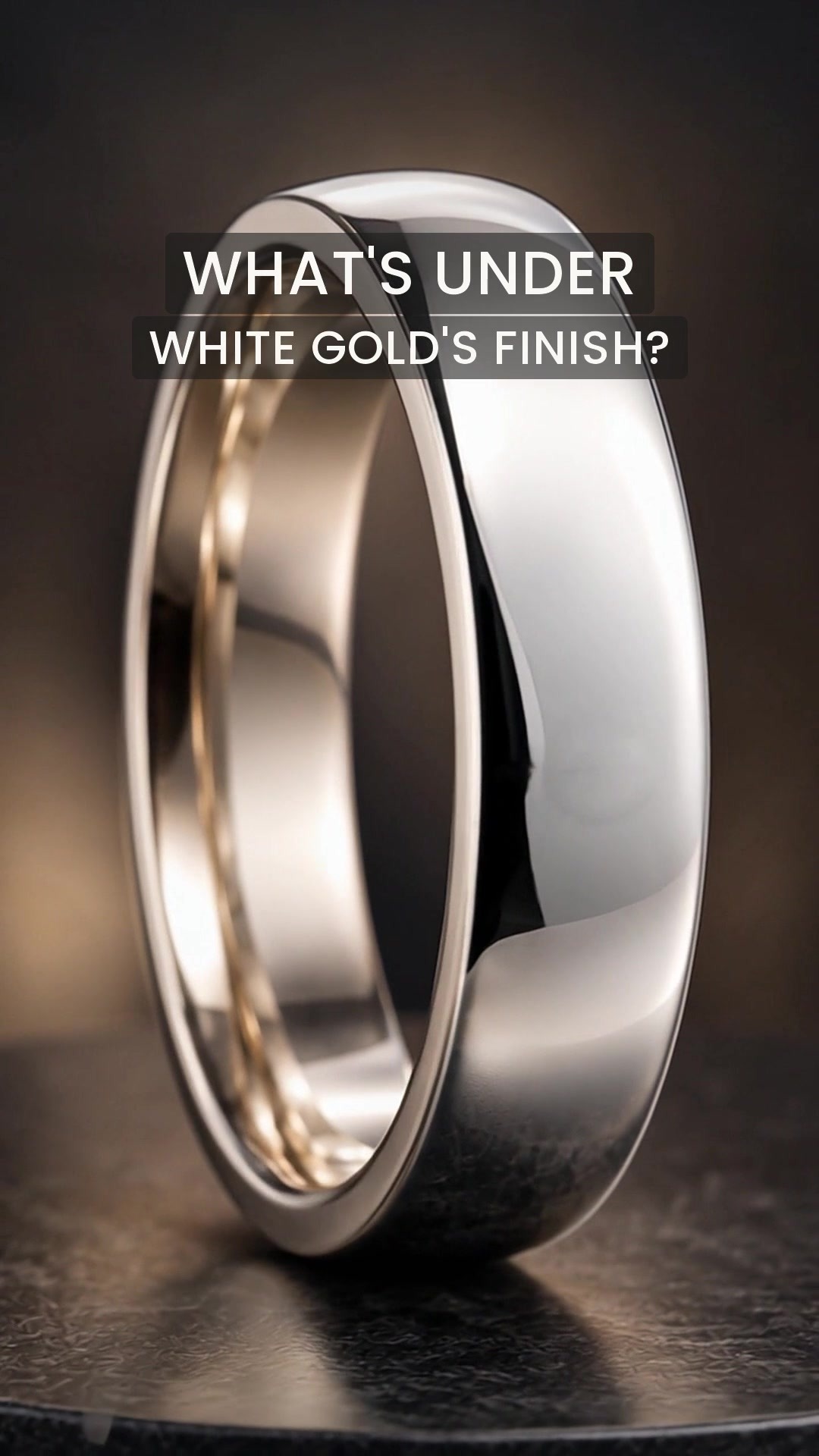
What is under white gold's bright finish?
Rhodium plating on white gold, why it wears, and the service question to ask.
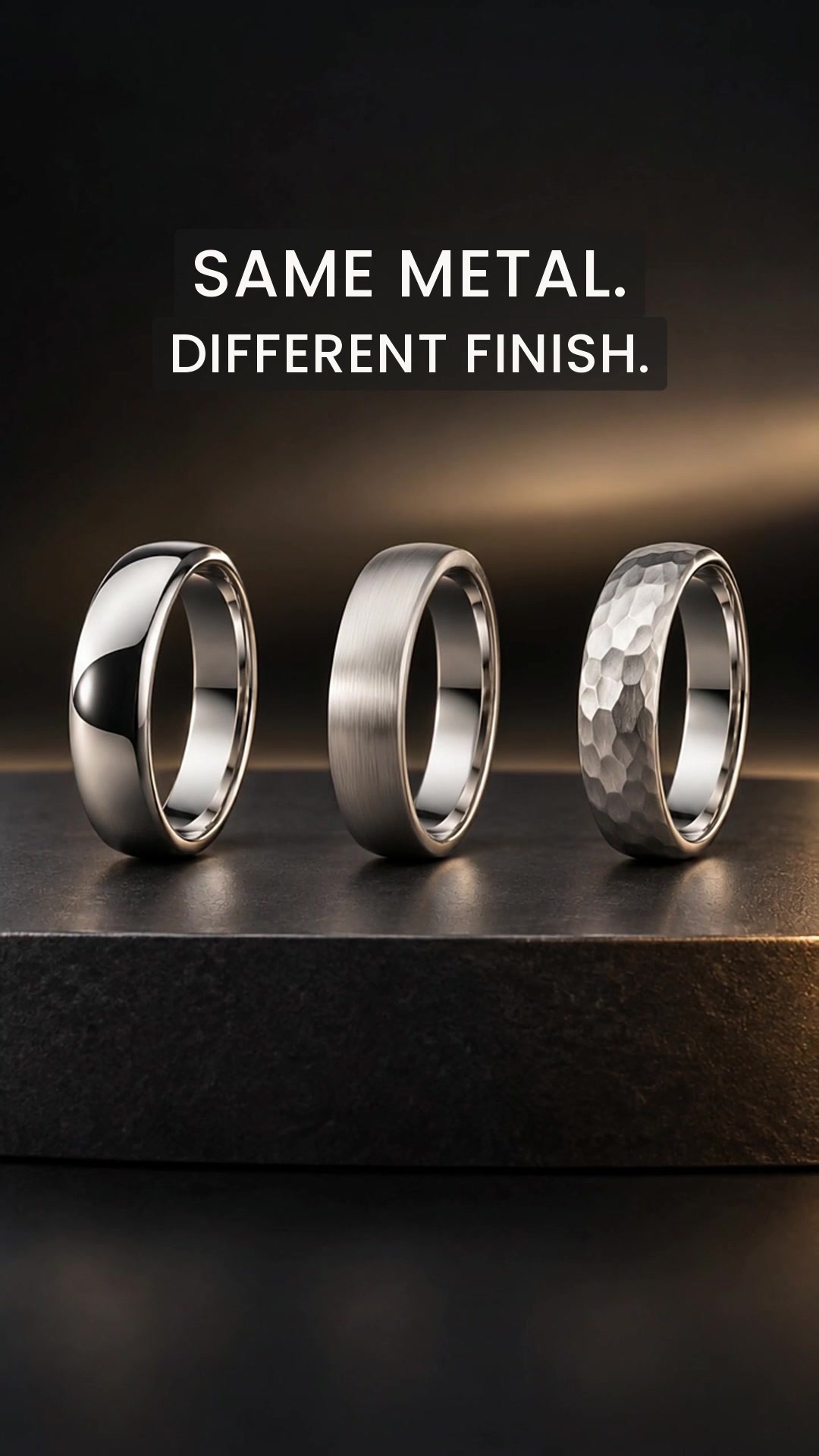
Same metal. Different finish.
Polished, brushed, hammered. How surface treatment changes a ring's look, not its hardness.
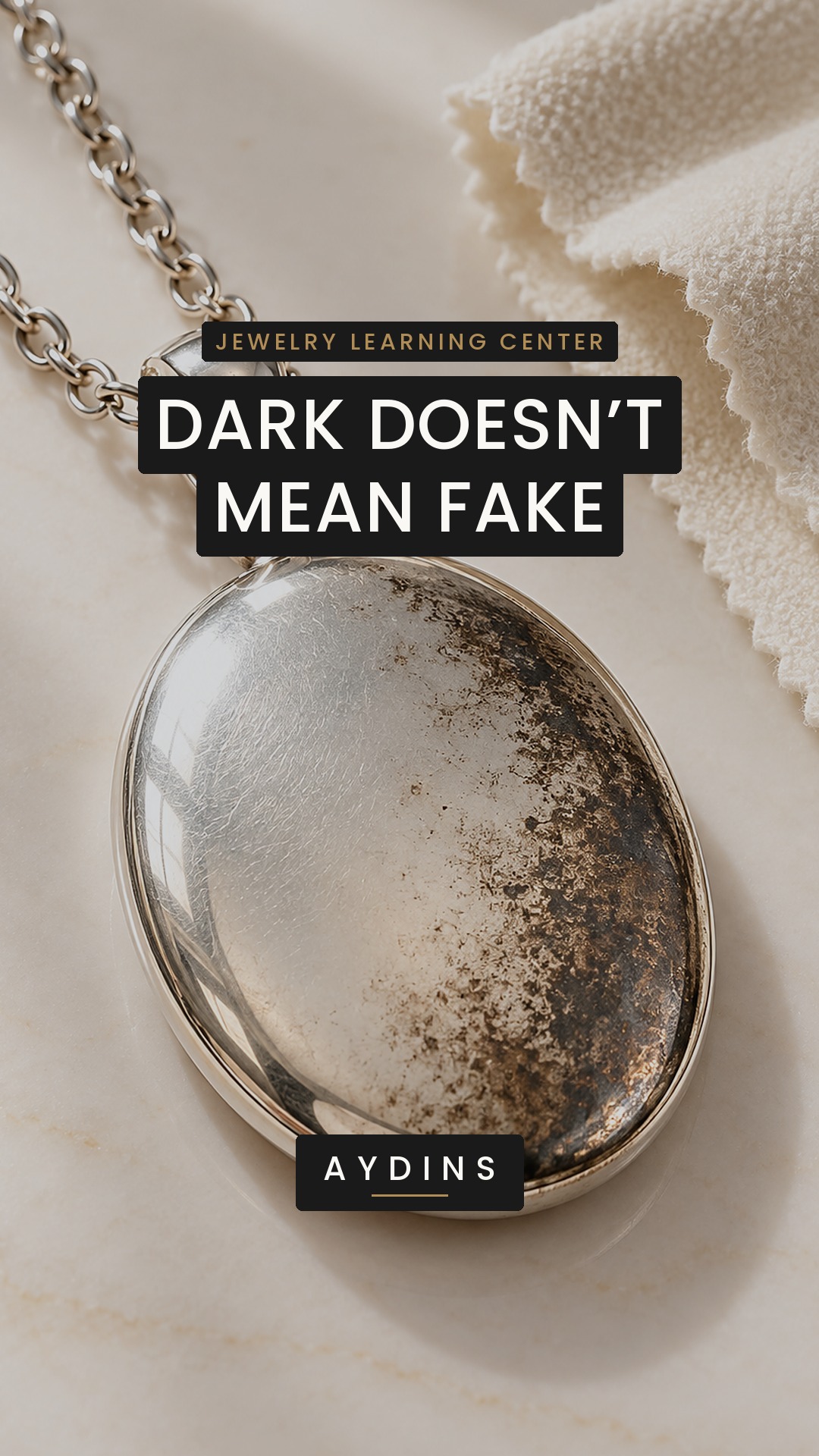
Why real silver turns dark.
Tarnish is a surface change. Why dark does not mean fake, and what to check before polishing.
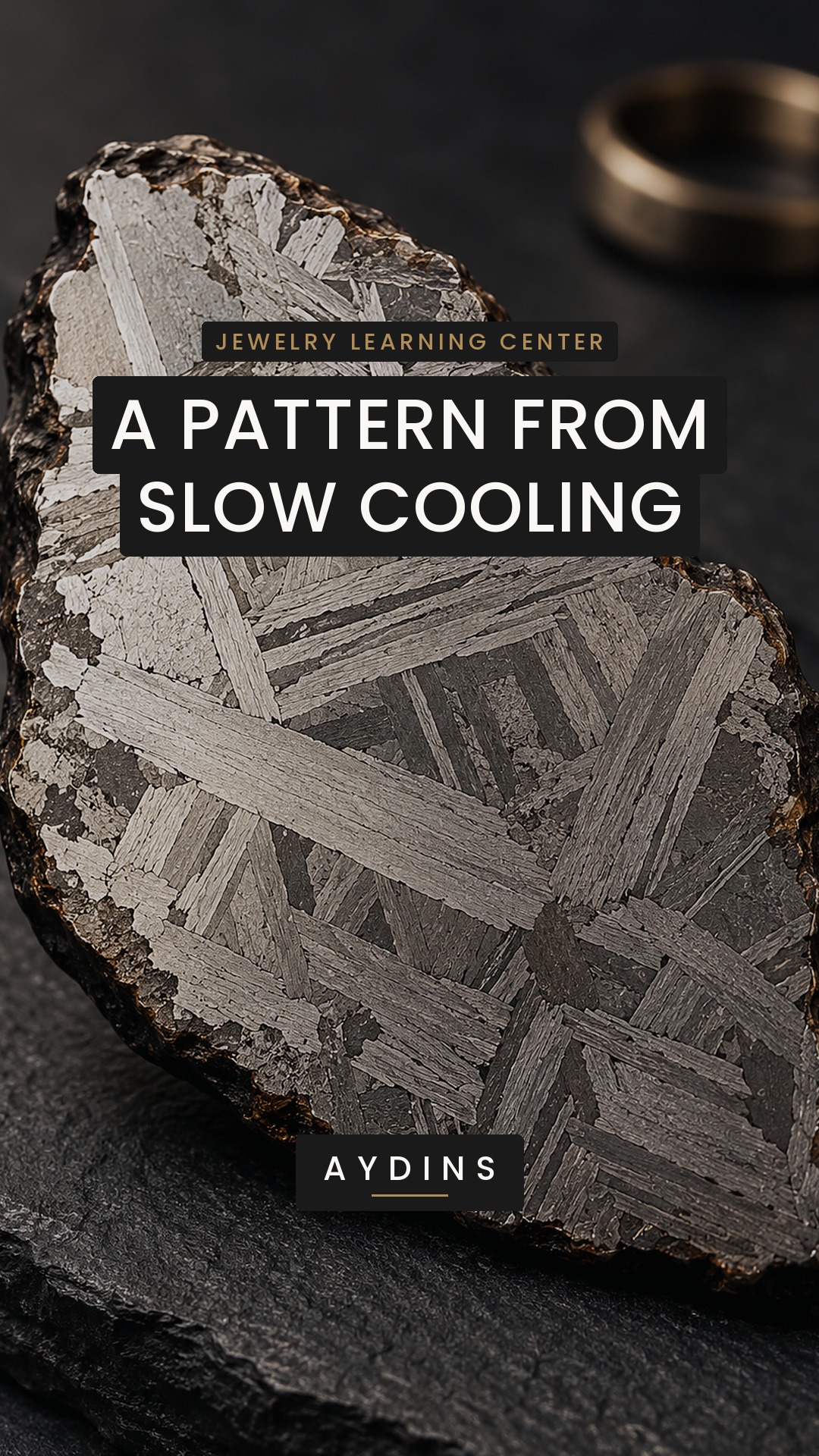
Where meteorite’s pattern comes from.
Bands formed during very slow cooling. Why a look-alike pattern is not proof.
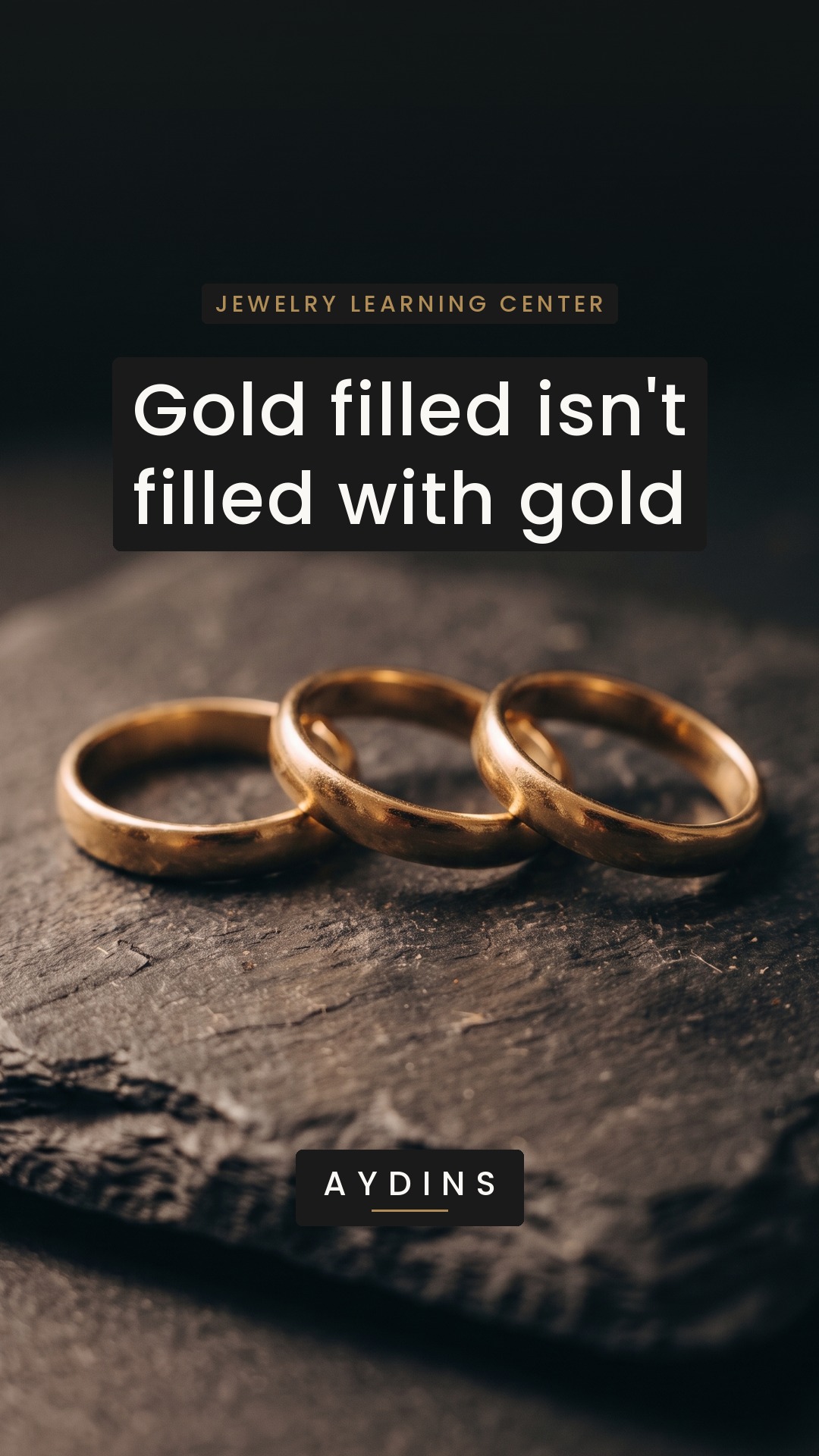
Gold plated, gold filled and vermeil.
They can look alike but are built differently. Gold filled is not filled with gold.
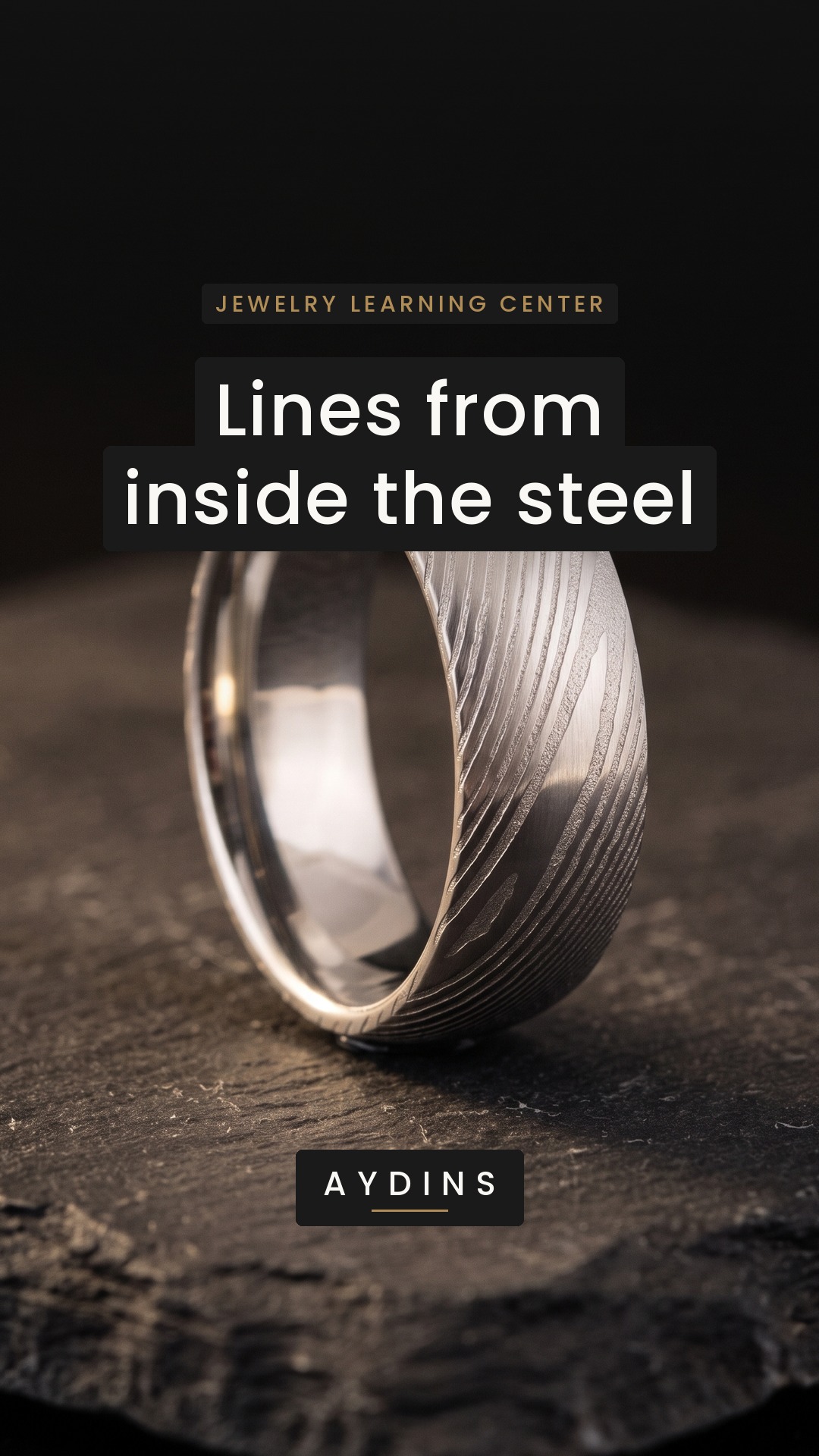
Where Damascus steel patterns come from.
Two steels forge-welded into one bar, then acid-etched until the pattern appears.
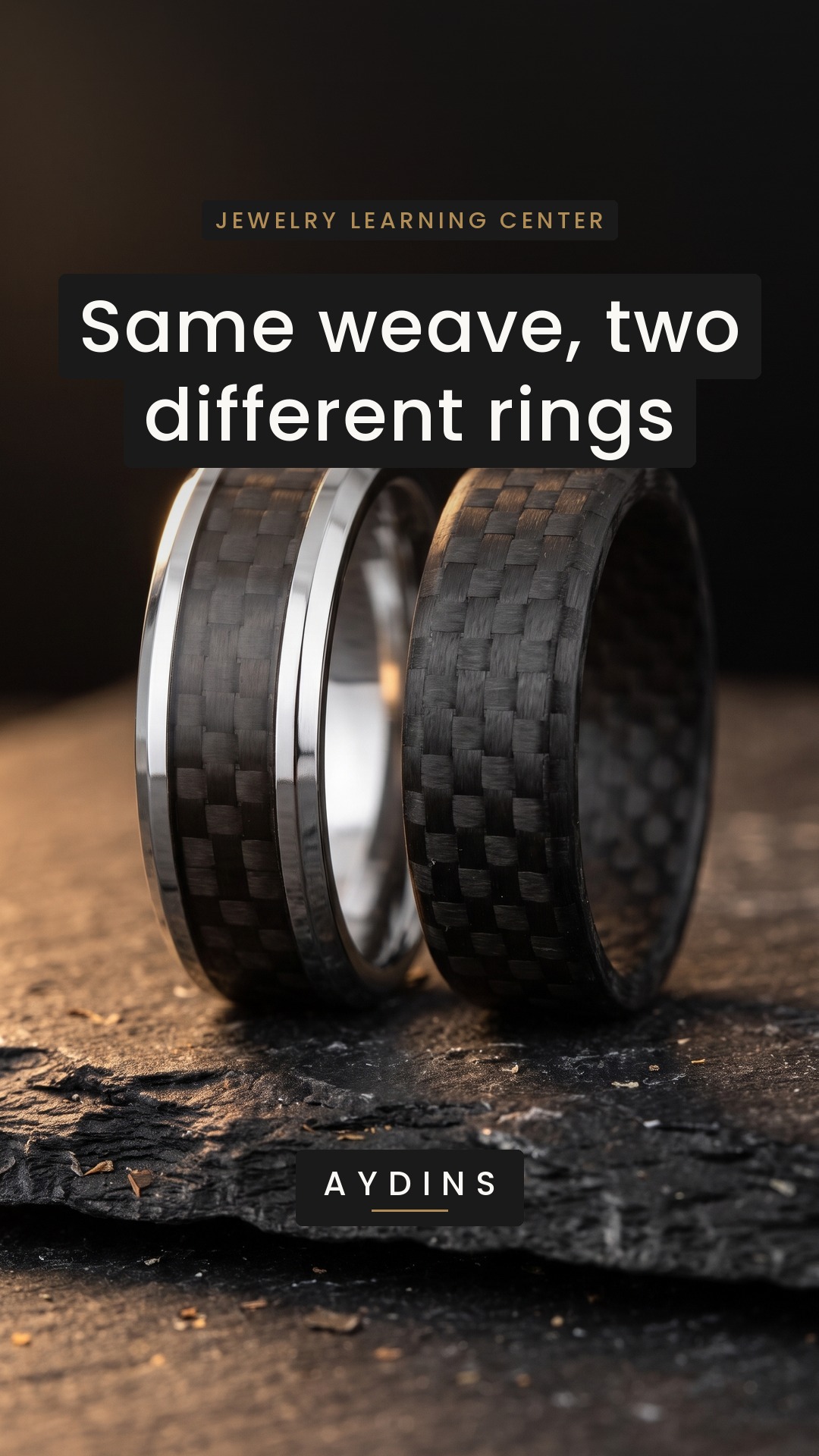
Carbon-fiber inlay versus a carbon-fiber ring body.
The same weave can be an inlay or the whole ring. Read the material line.
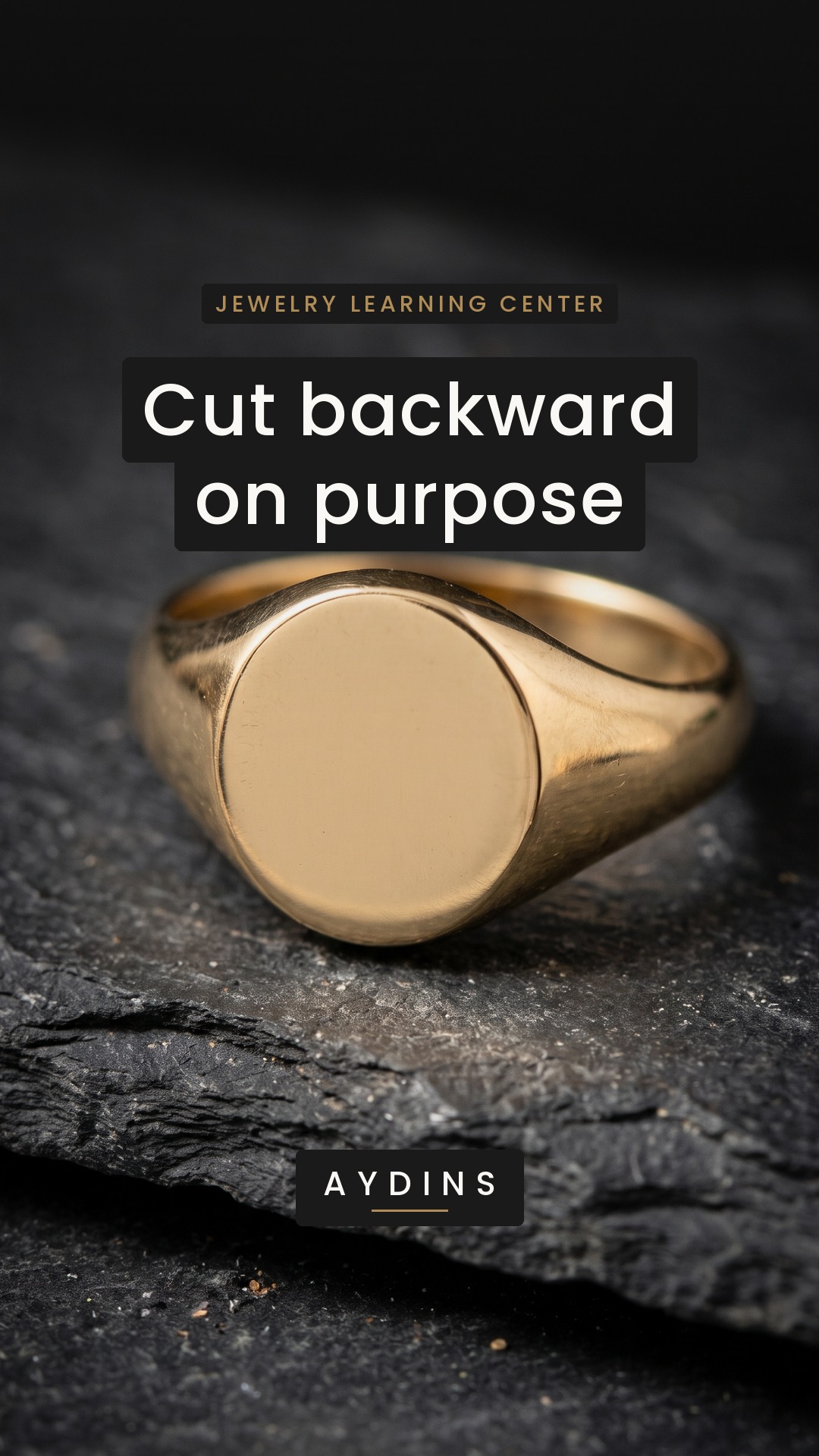
A signet design that reads backward.
A seal is cut in reverse so its wax impression reads right. Many signets are decorative.
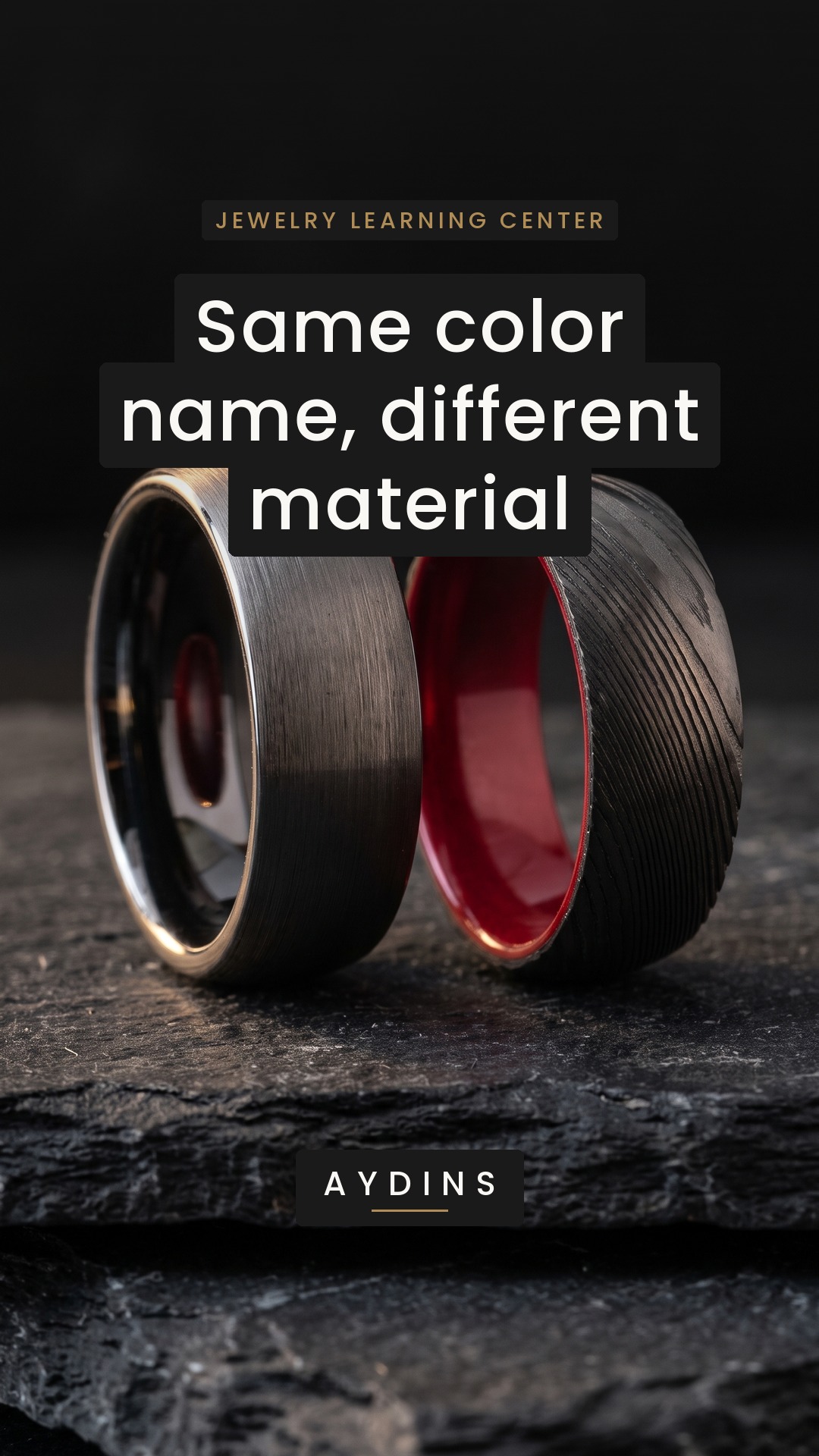
What gunmetal tells you about a ring.
A color name, not a material. Check the material line and how the color is made.
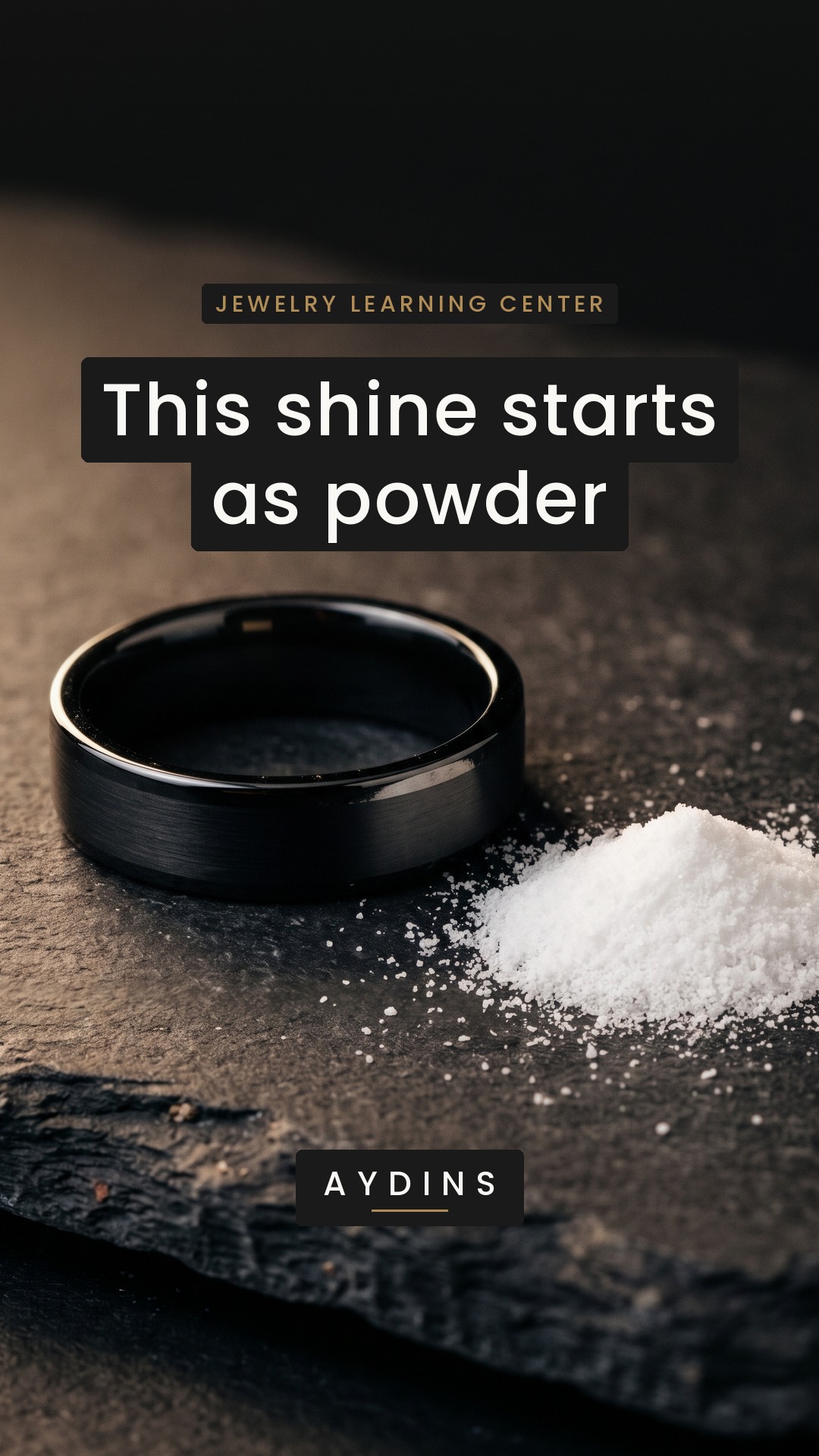
How technical ceramic starts as powder.
Powder and binder, shaped, fired until it bonds and shrinks, then polished.
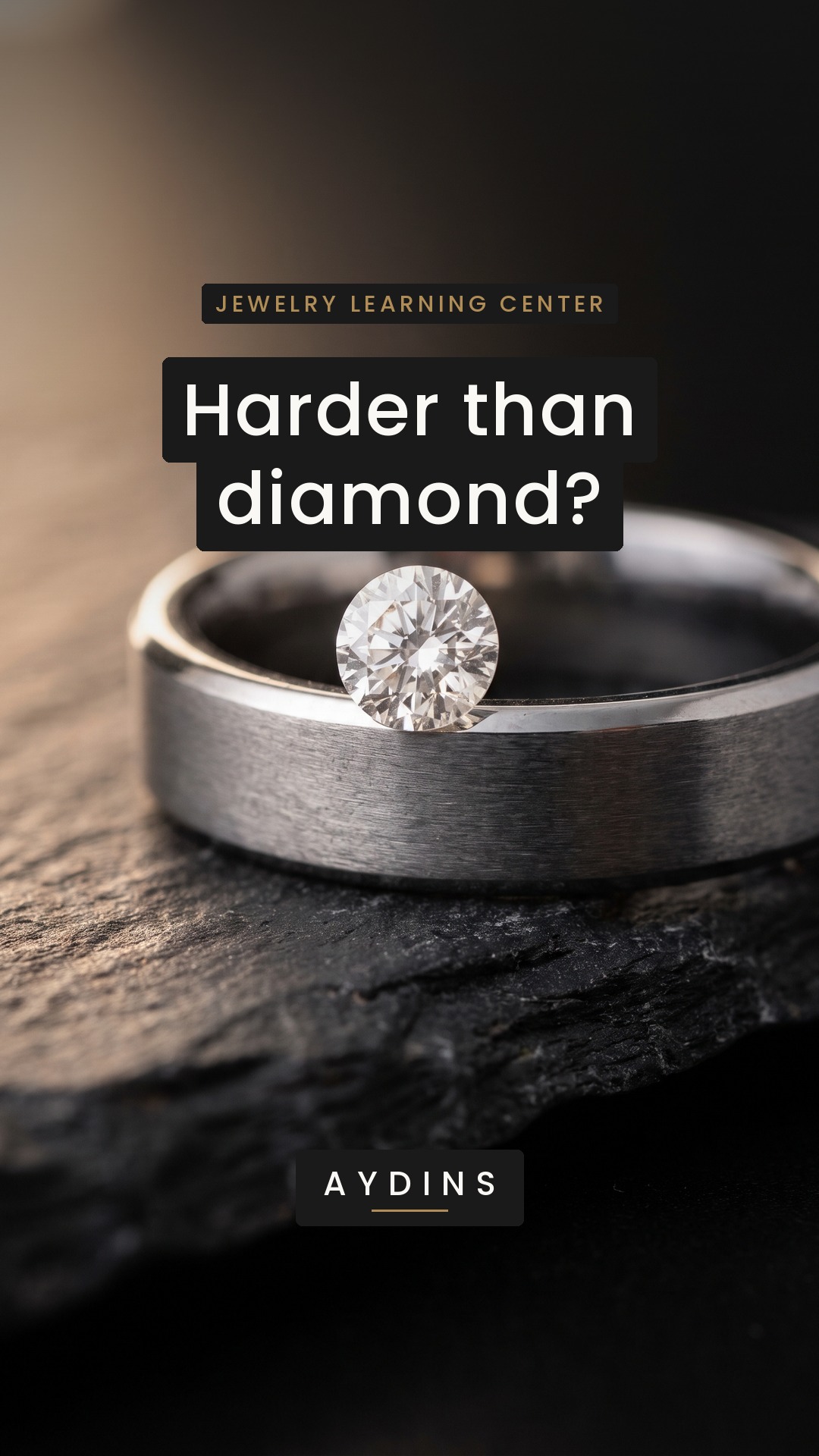
Is tungsten harder than diamond?
Diamond 10, tungsten carbide about 9, titanium about 6. What can scratch what.
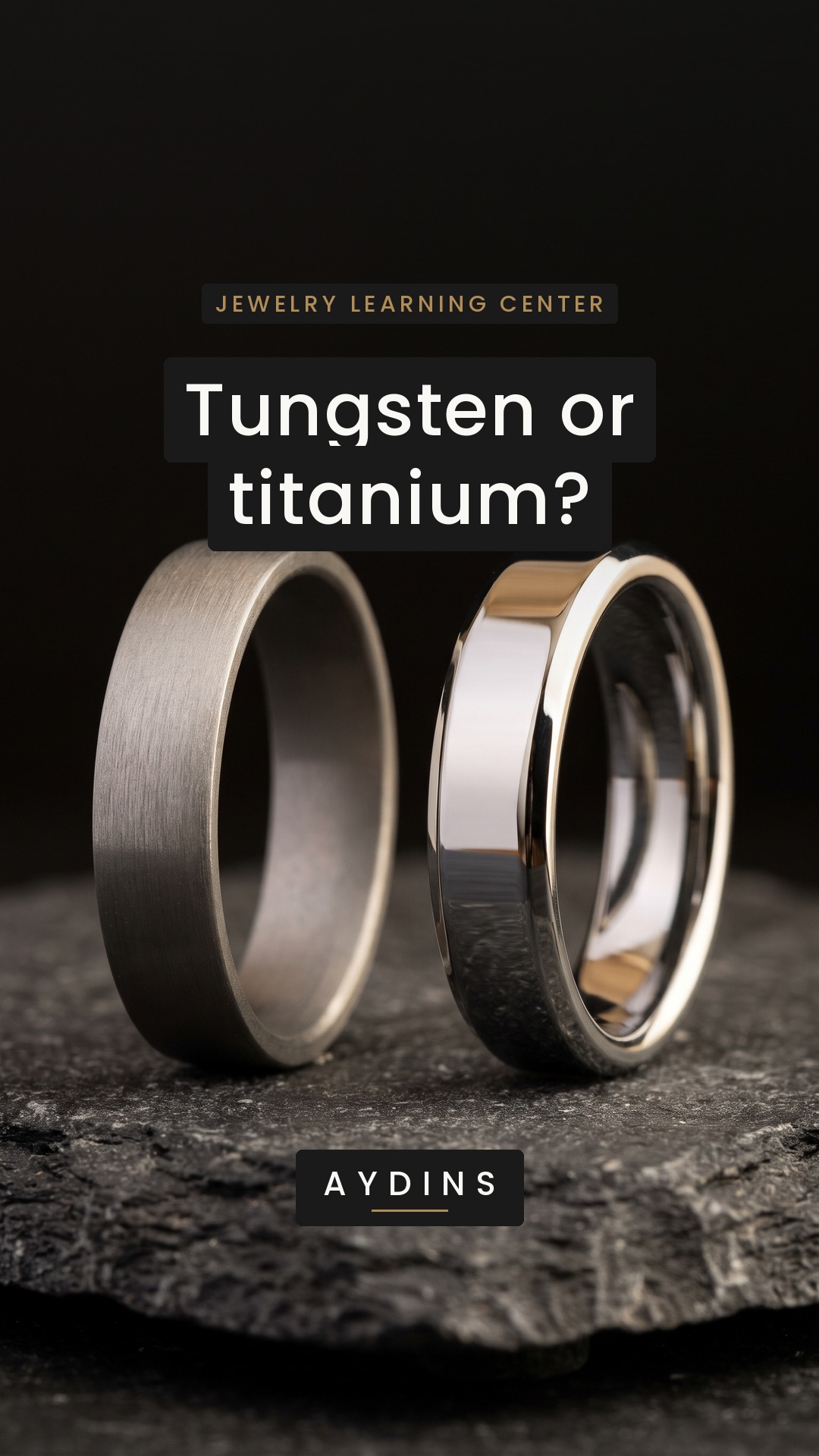
Tungsten or titanium?
Harder and weightier, or lighter and a little flexible. Pick the feel first.
Topic 3 of 5
Necklaces
Where a necklace sits, what is inside a chain link, why a thin chain can still fail to fit a pendant, why herringbone kinks, and how a lobster clasp closes.
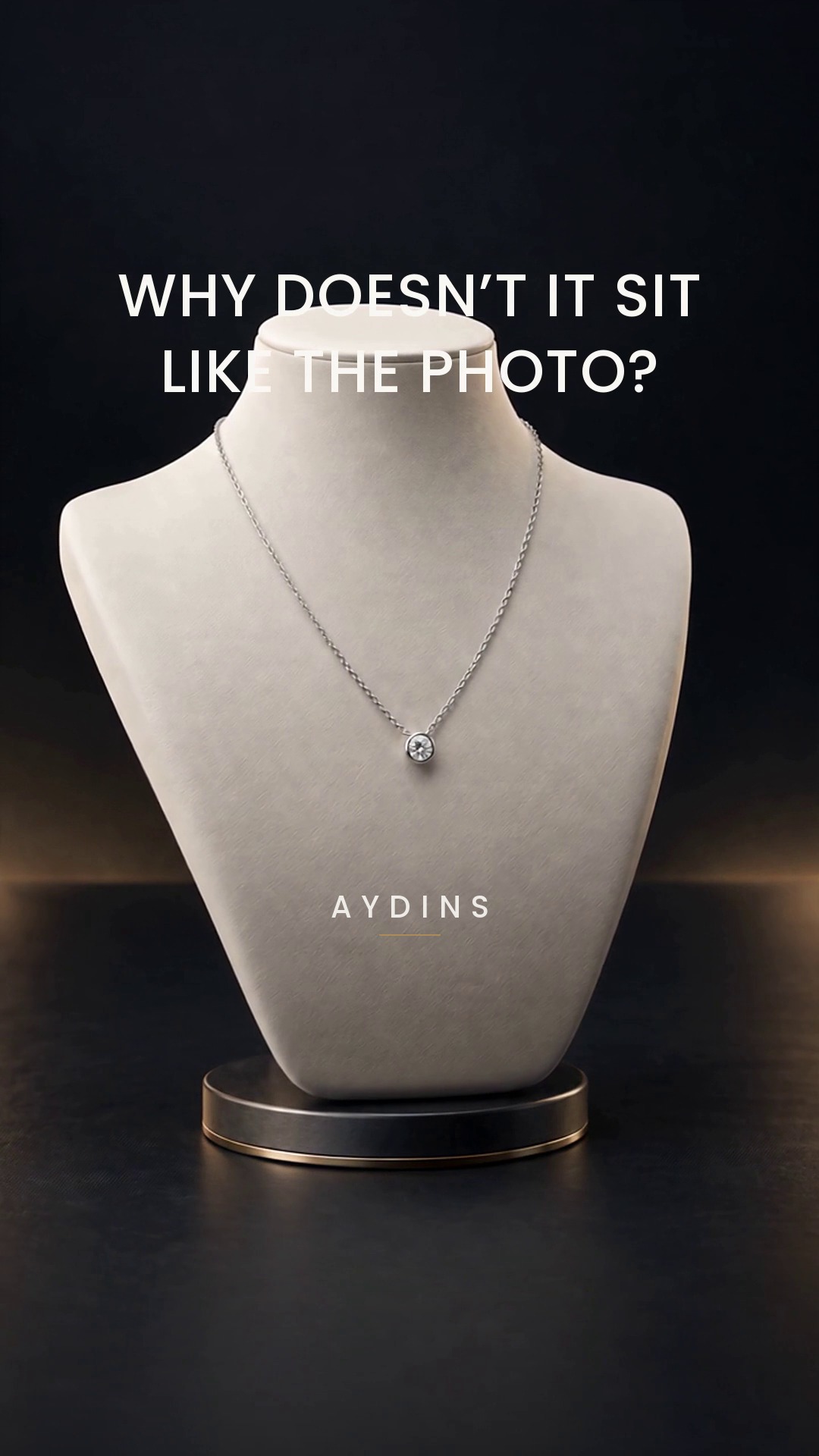
Why a necklace sits differently on you.
16, 18, 20 inches. Where each length lands, and how to preview a chain before you buy.
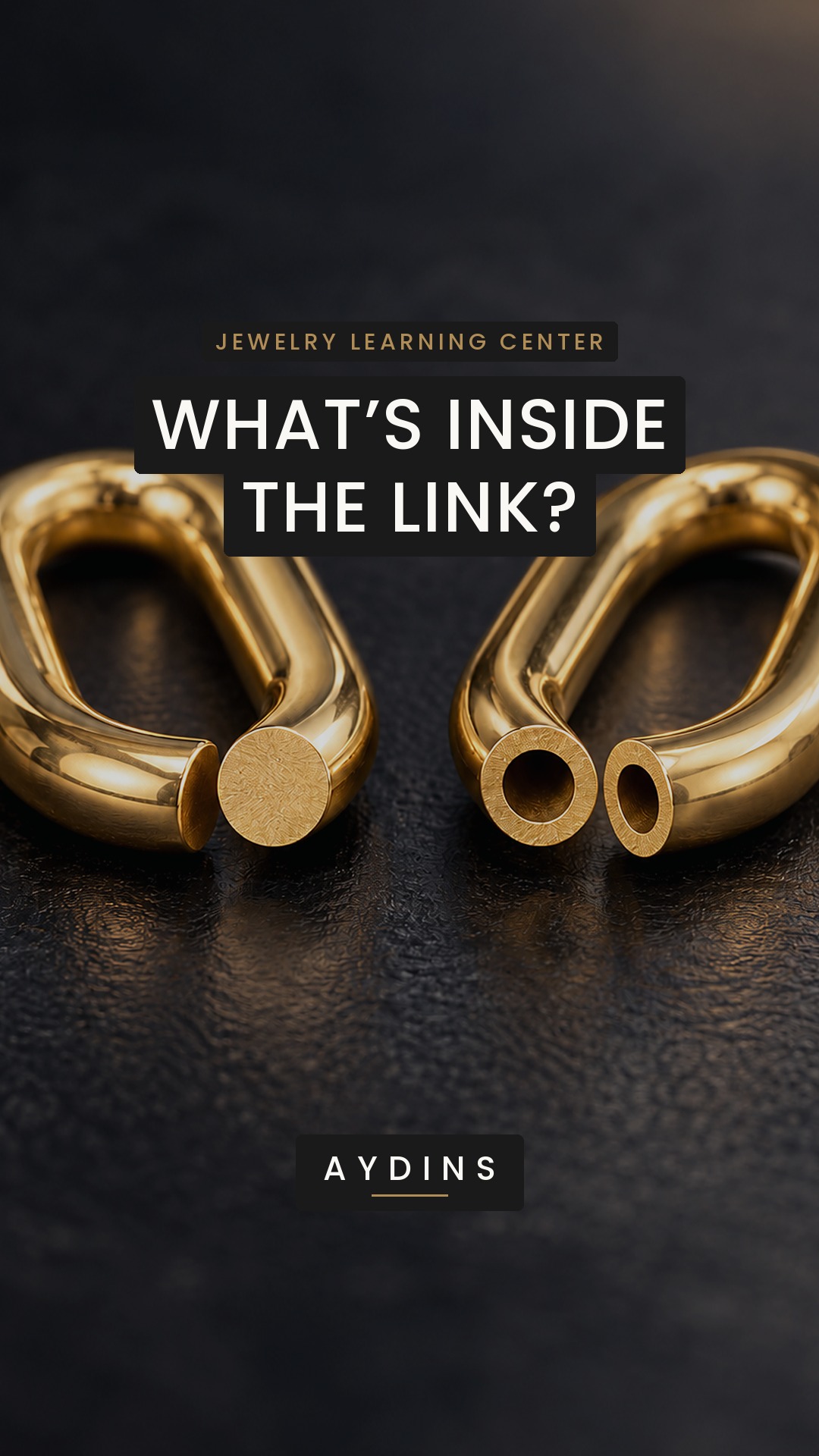
Solid versus hollow gold chain.
Construction is not karat. What a hollow link changes.
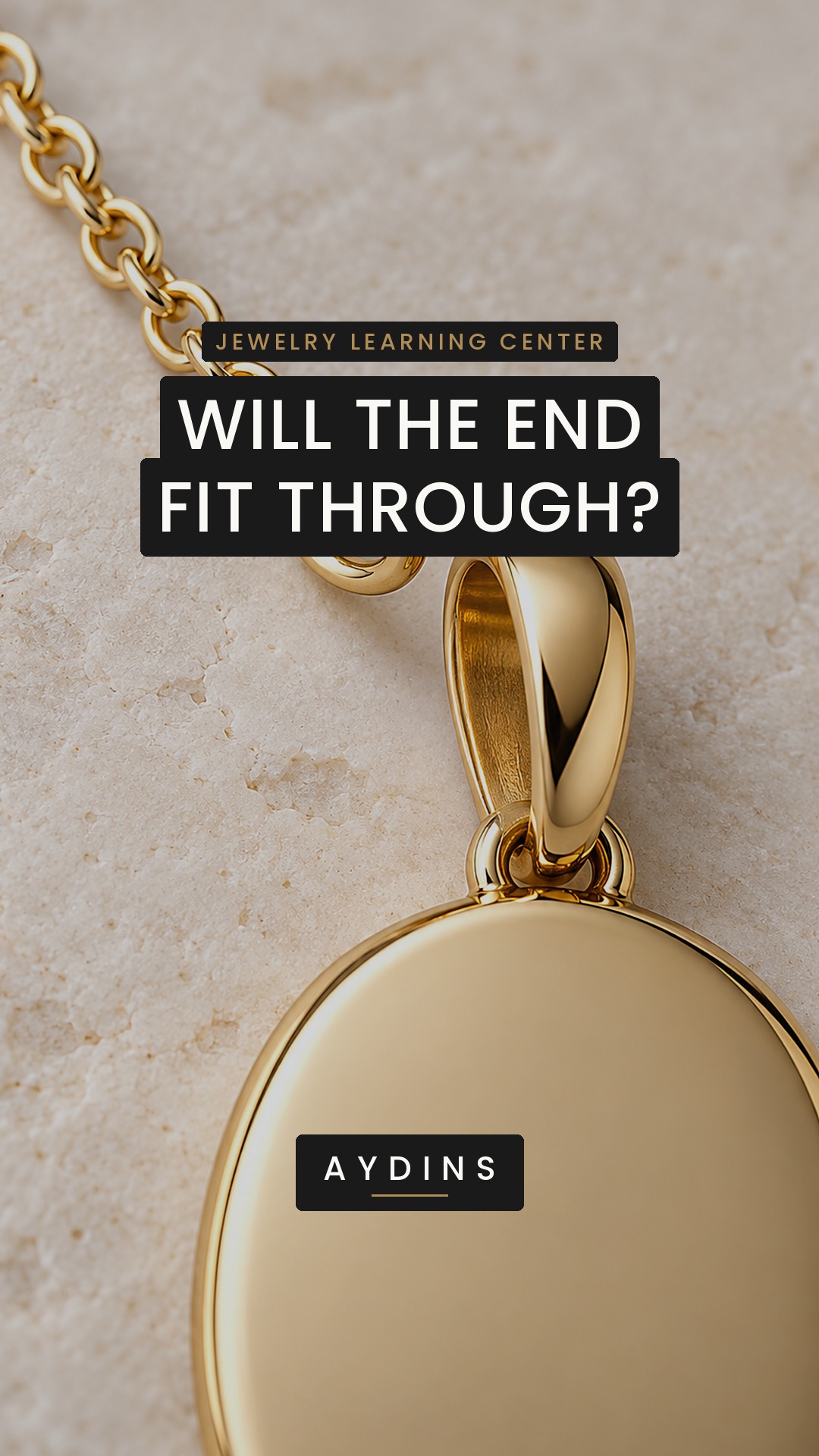
Why your chain will not fit your pendant.
The end ring or clasp may be wider than the chain. Check the bail opening.
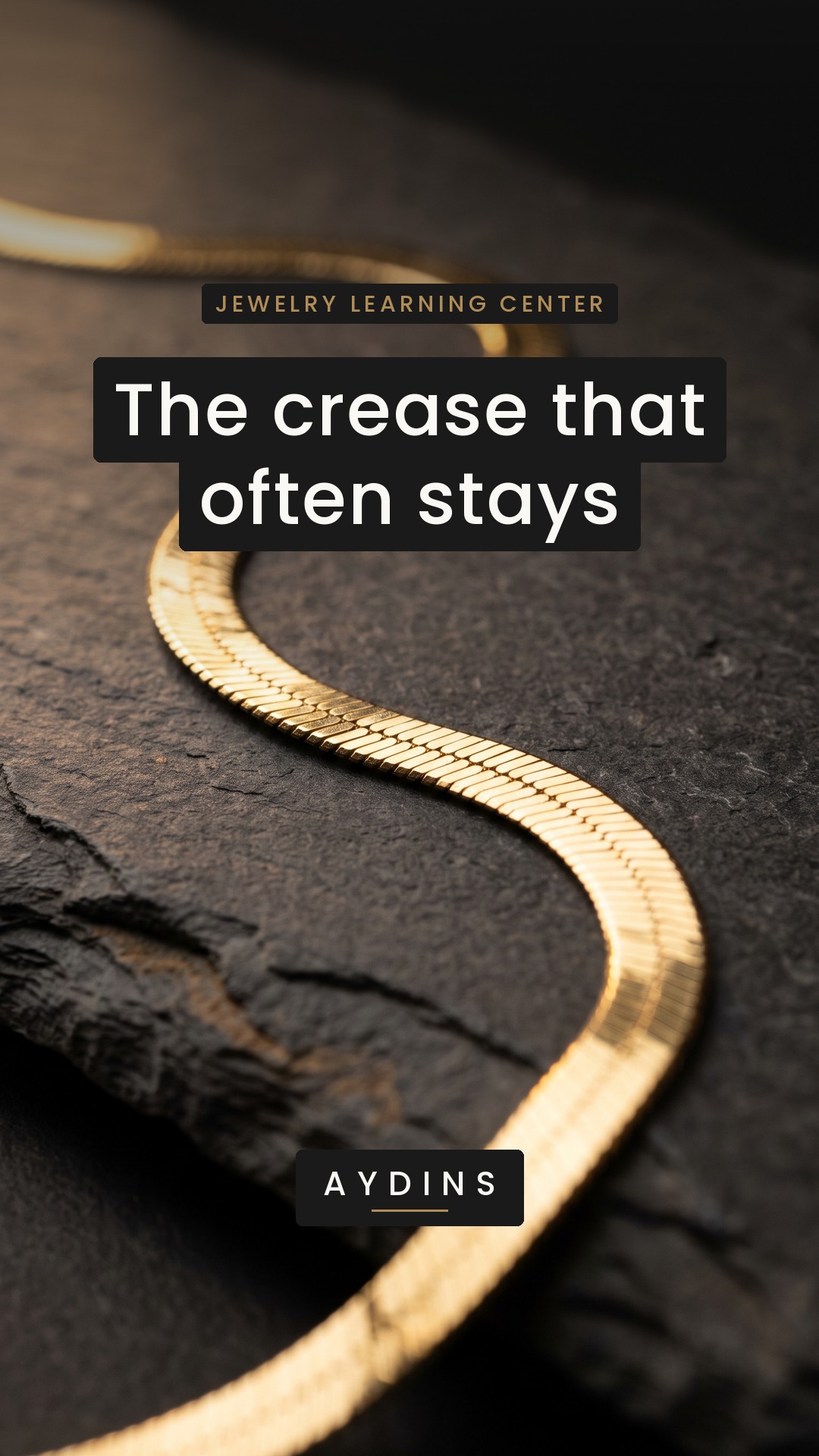
Why a herringbone chain can kink.
Flat, slanted links lie smooth, and a sharp bend can leave a crease. How to store it.
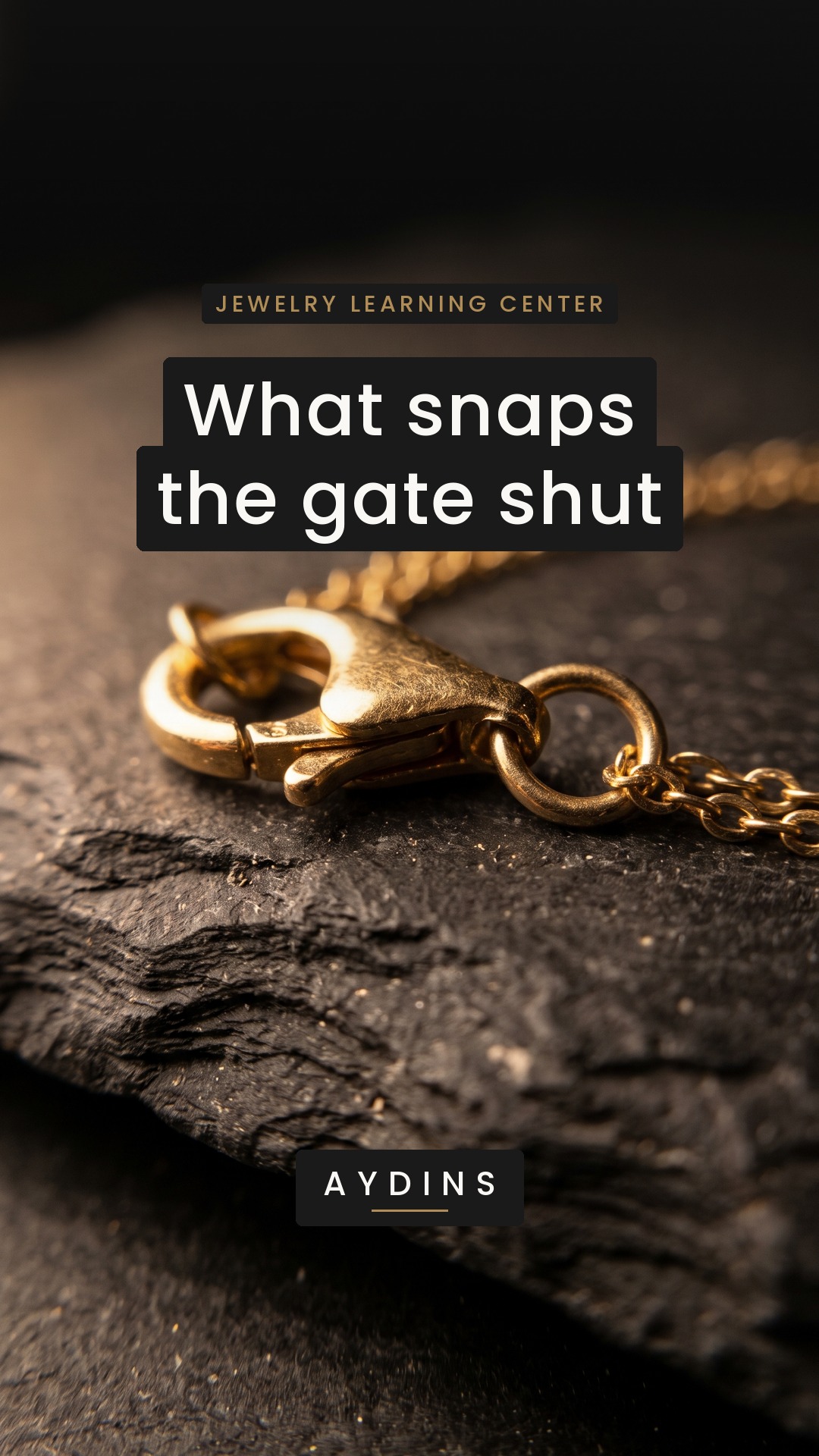
Inside a lobster clasp.
Lever, gate and, in one common design, a steel spring. What a healthy clasp does.
Topic 4 of 5
Diamonds & Engagement Rings
Carat is a weight. Lab-grown is still diamond. Cut steers light, clarity is graded at 10x, a report still has to match the stone, and a UV glow is not a test. Lessons that remove the usual confusion before you buy.
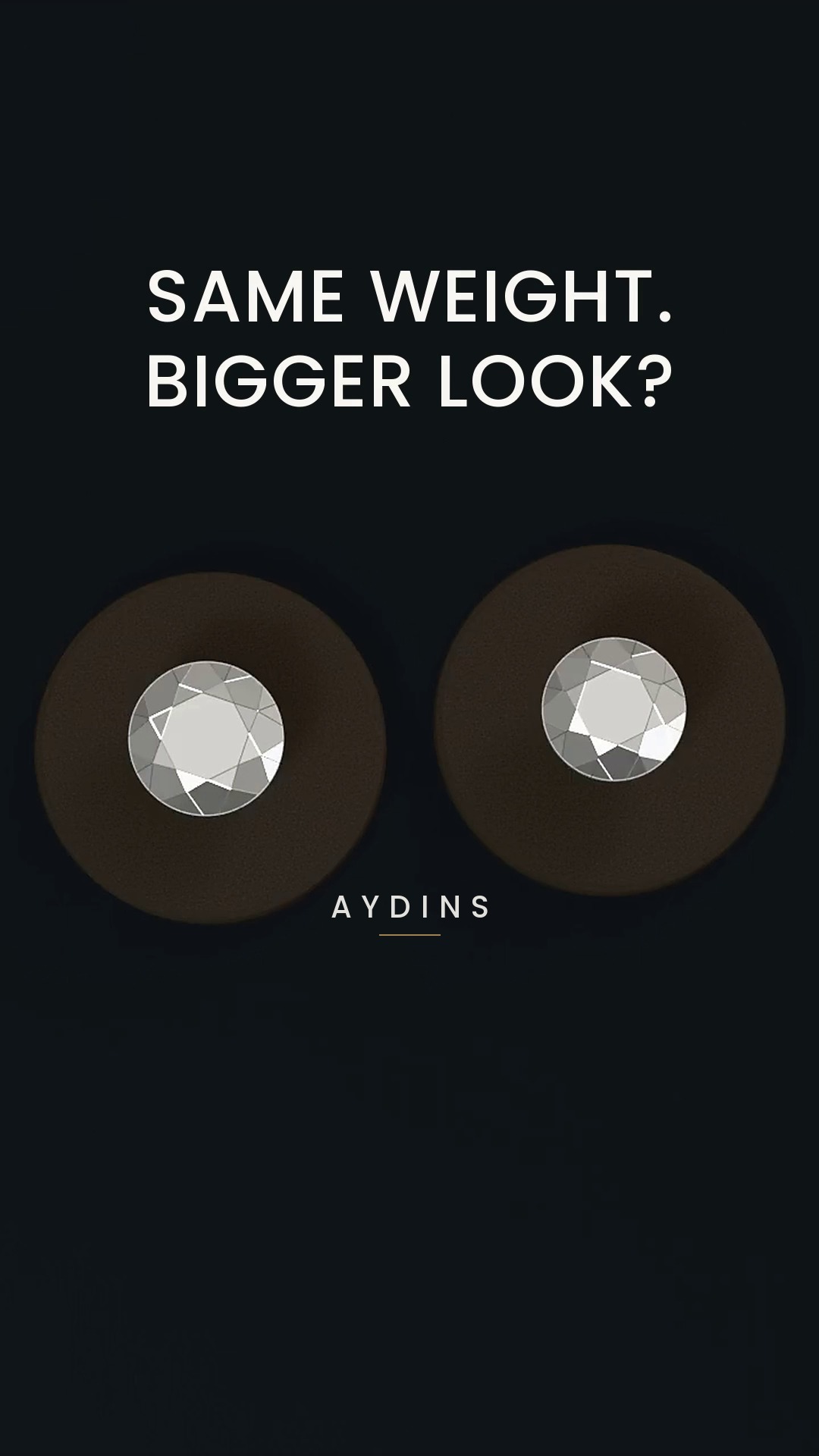
Same carat weight, different look.
Carat is a weight, not a size. Why two 1-carat stones can measure differently across the top.
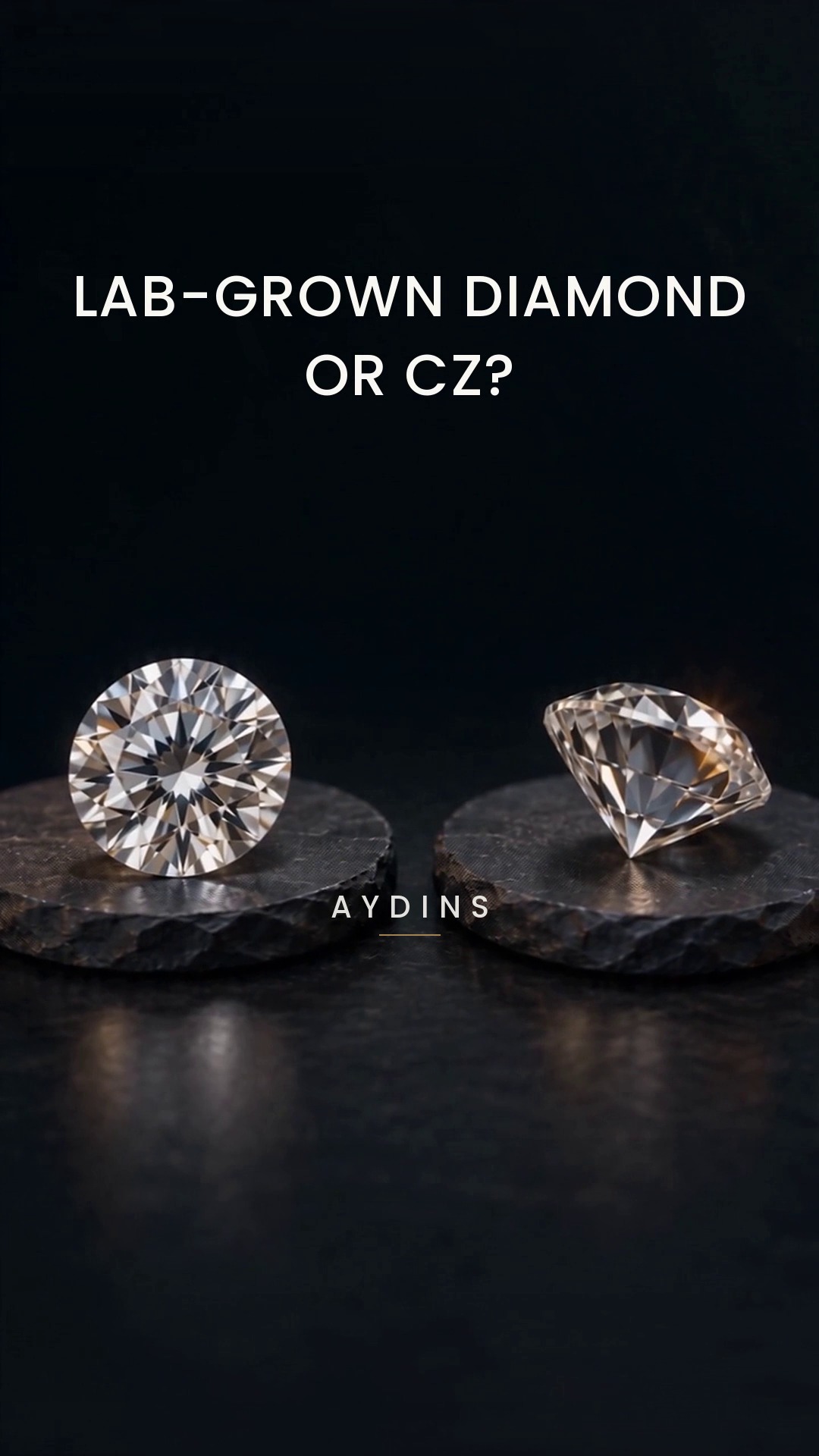
Lab-grown diamond vs cubic zirconia.
Same look at a glance, different material. The one check that separates diamond from simulant.
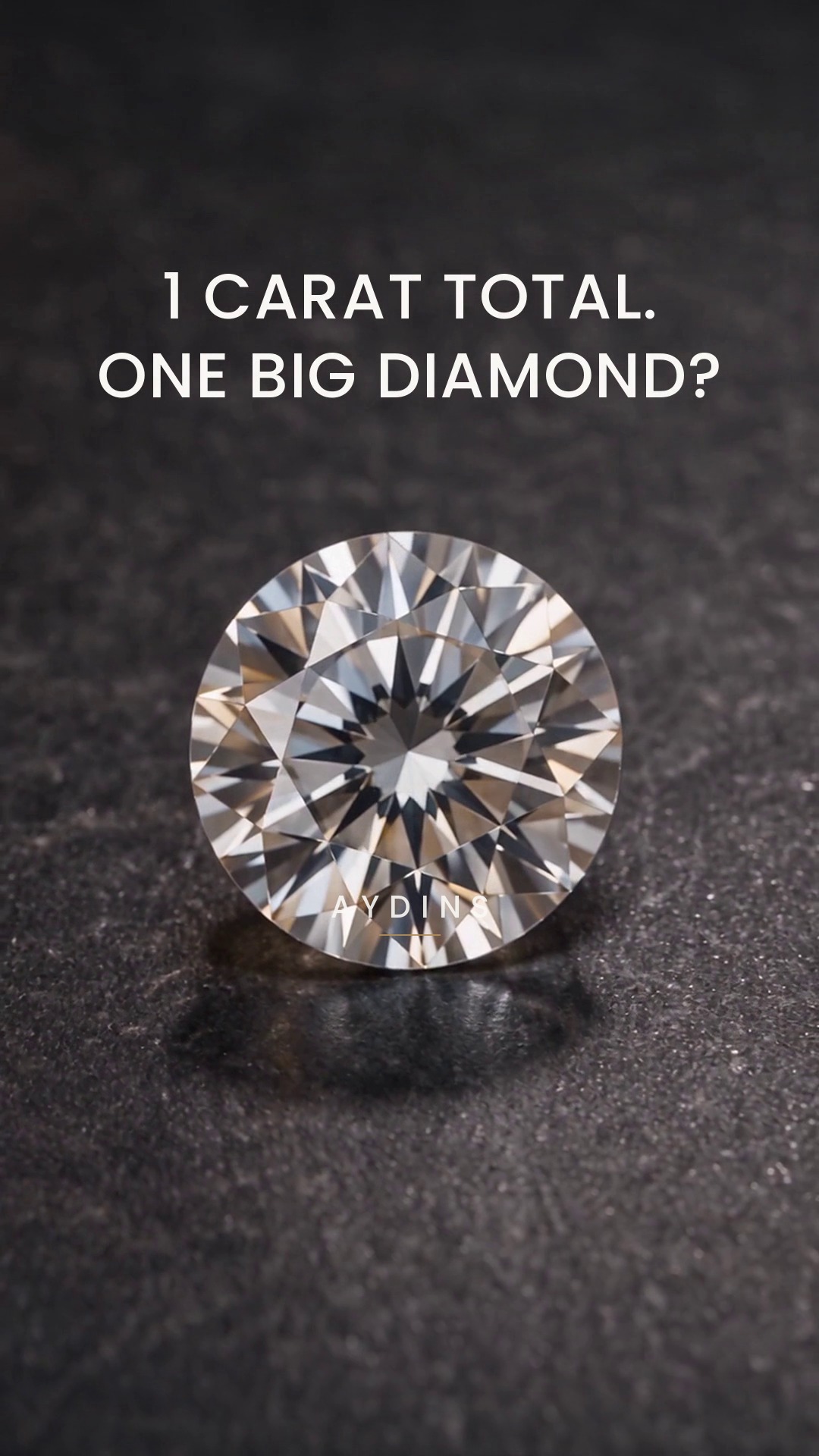
Total carat weight explained.
One carat total is not always one big diamond. How to read the number on a listing.
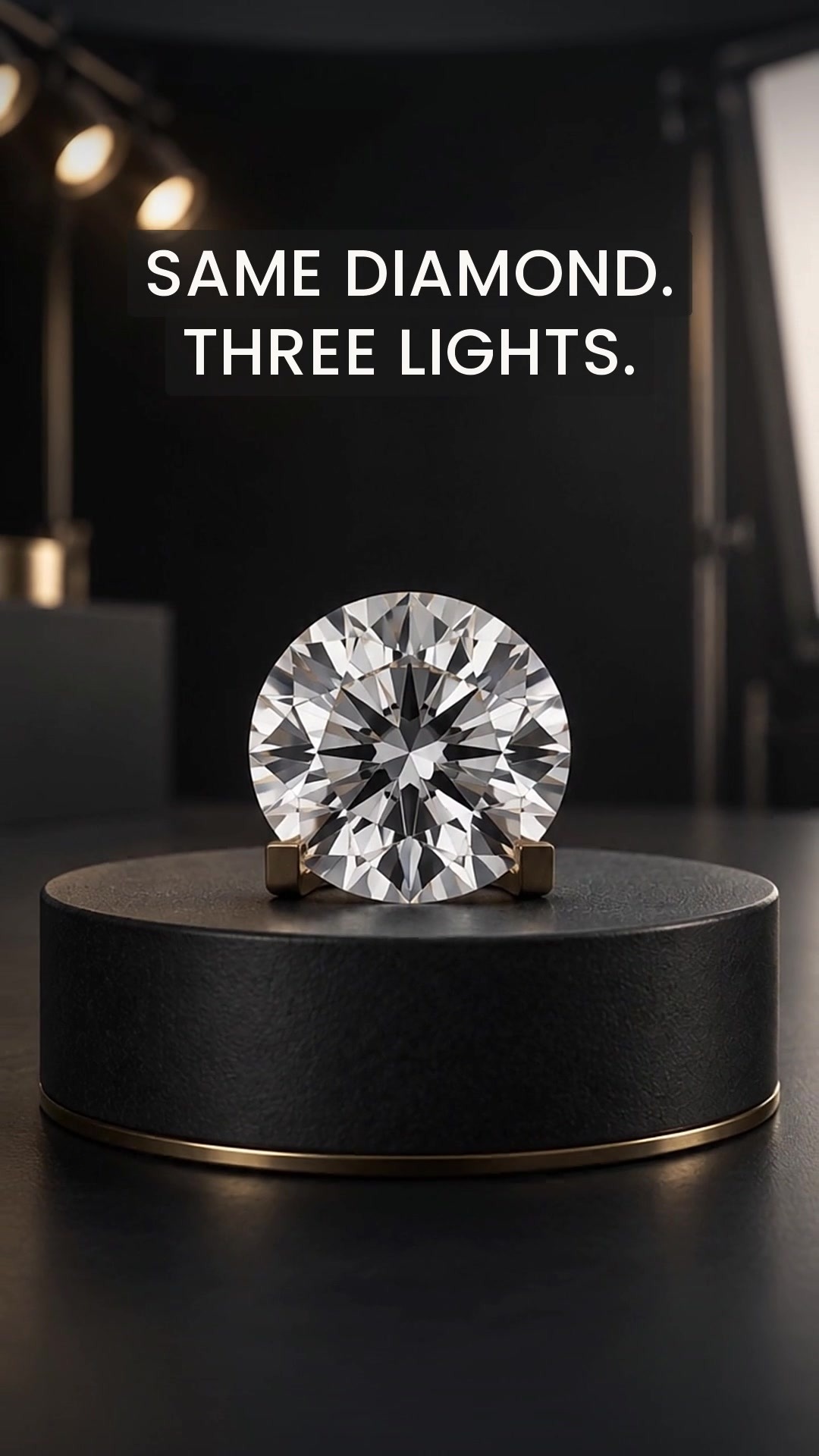
Same diamond. Three lights.
One diamond, three lighting setups. Why facets reflect the room around them.
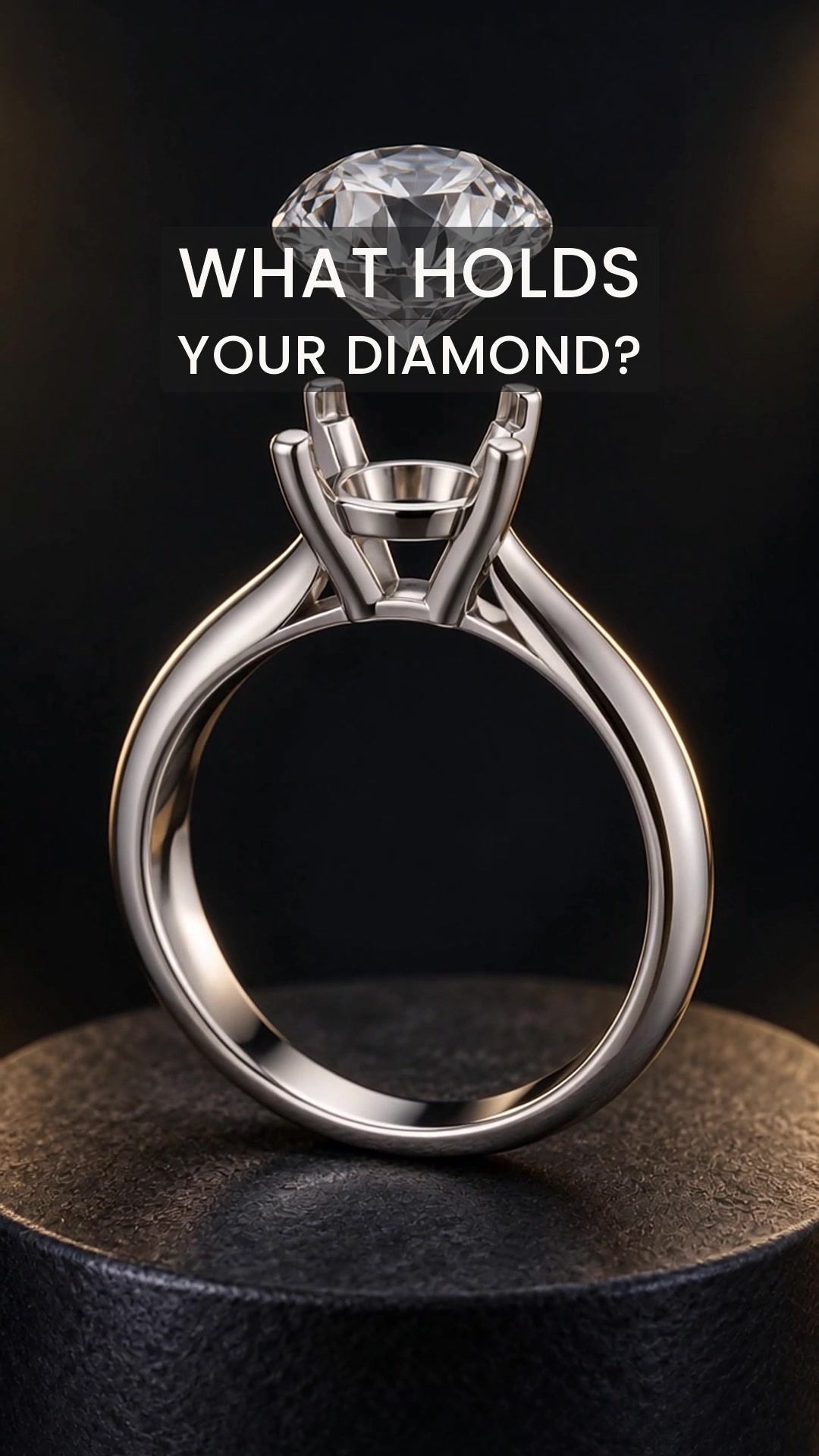
Prong vs bezel settings.
Prongs reach over the stone's edge. A bezel wraps the whole edge. Different look, different trade-offs.
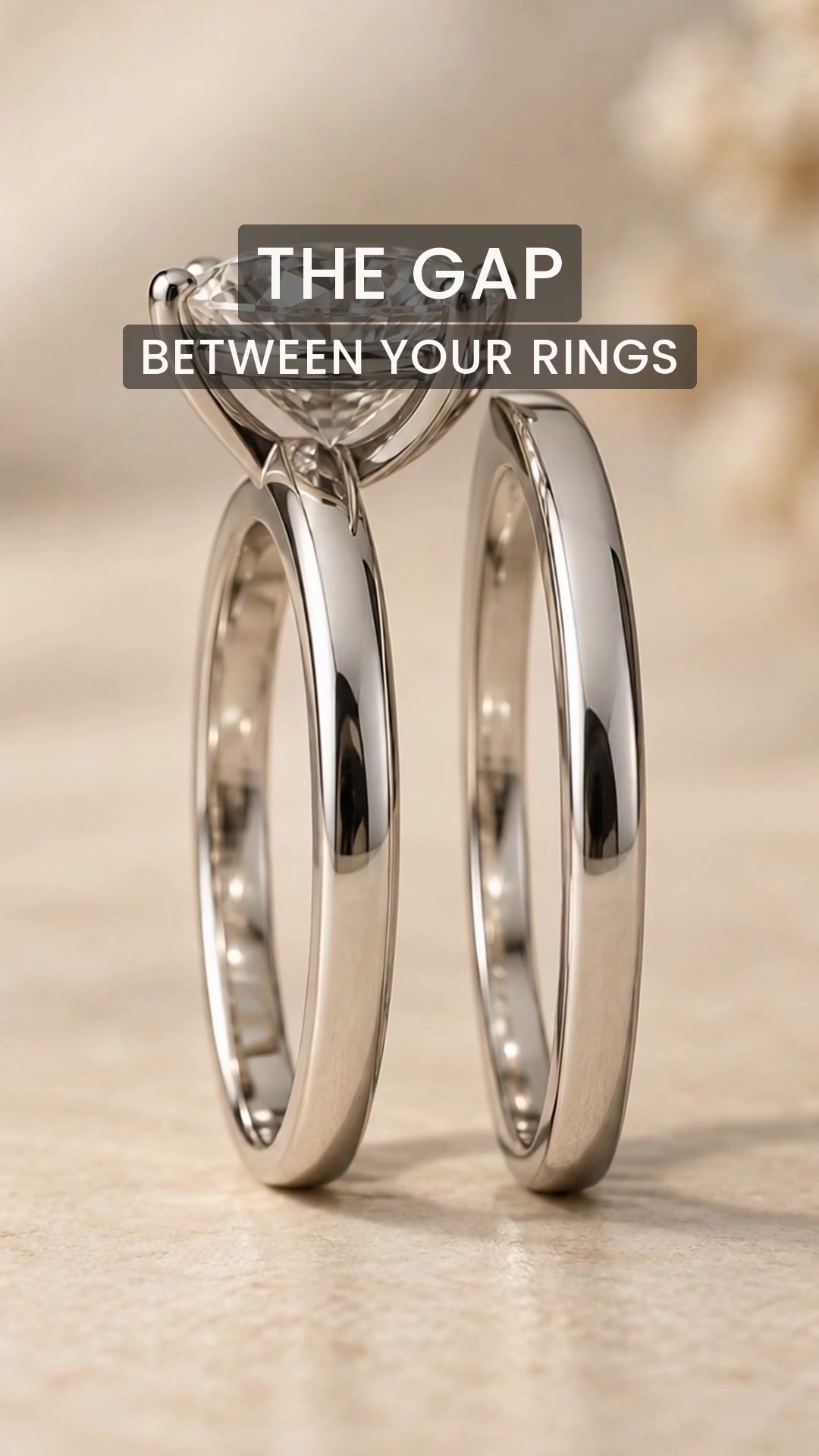
The gap between your rings.
Why some wedding bands do not sit flush with the engagement ring, and what to do about it.
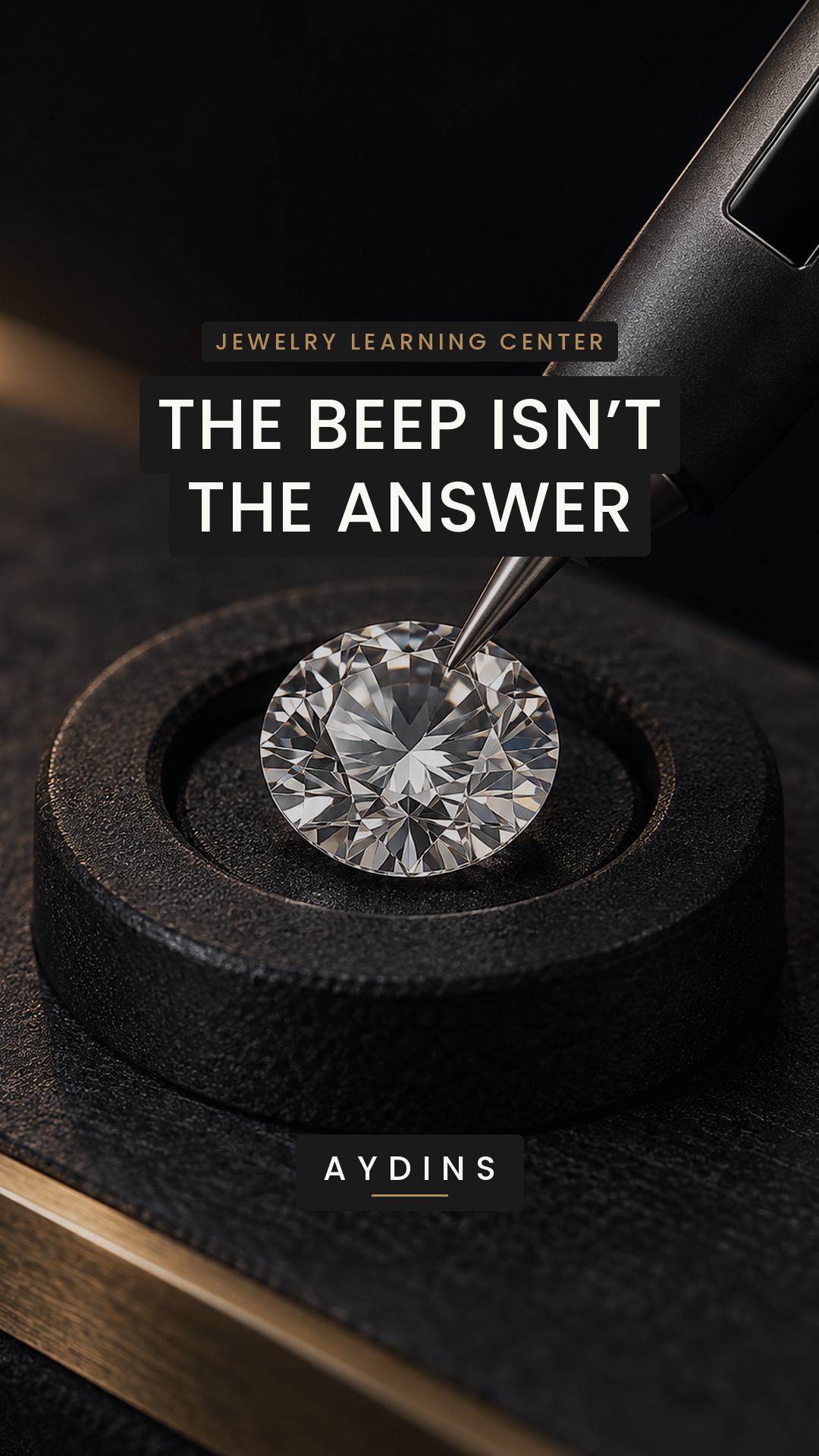
What did that diamond tester actually prove?
A beep checks heat flow, not origin. What a basic thermal tester can and cannot tell you.
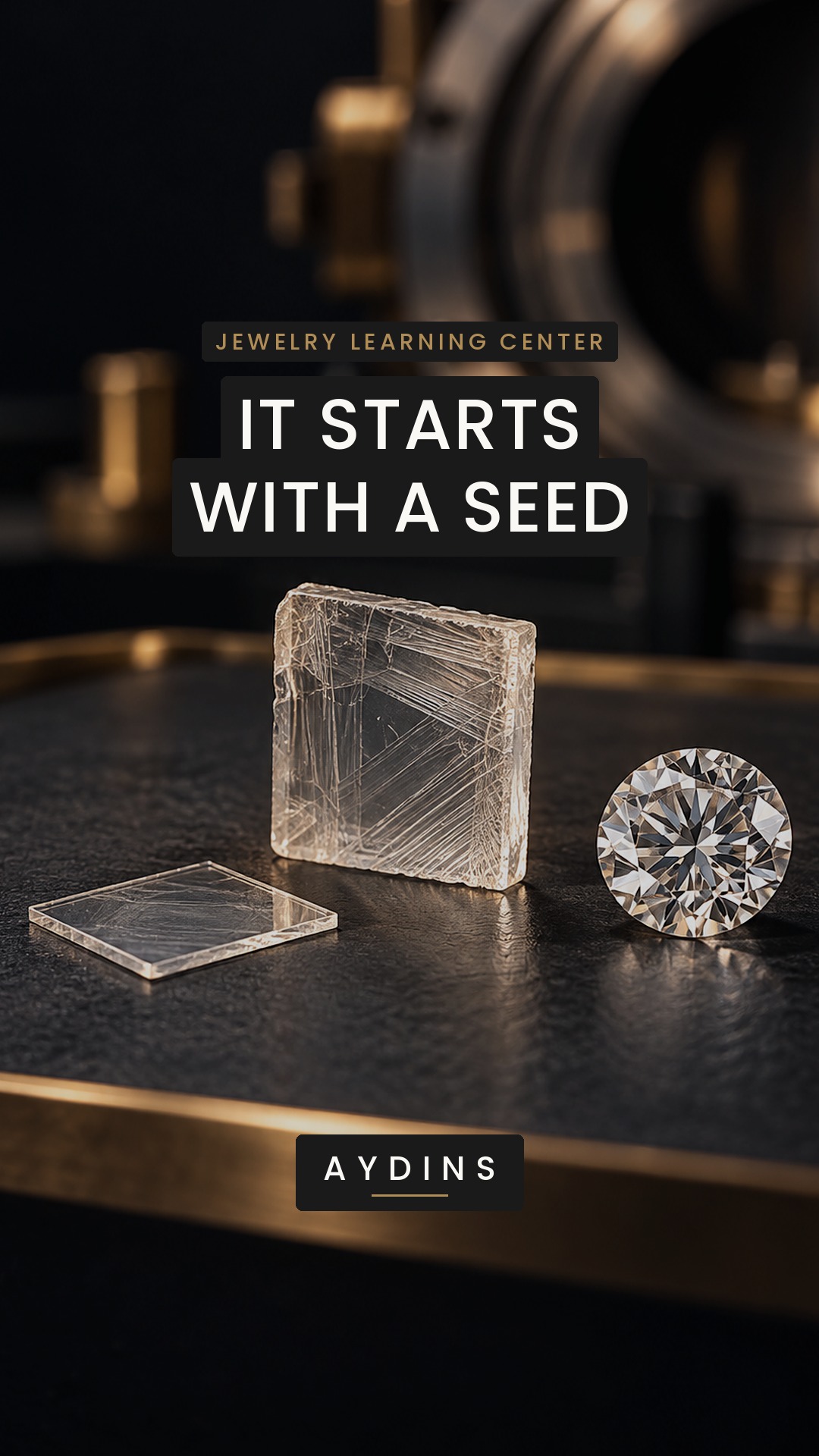
From a diamond seed to a finished stone.
CVD and HPHT are two growth methods. The rough still needs cutting and polishing.
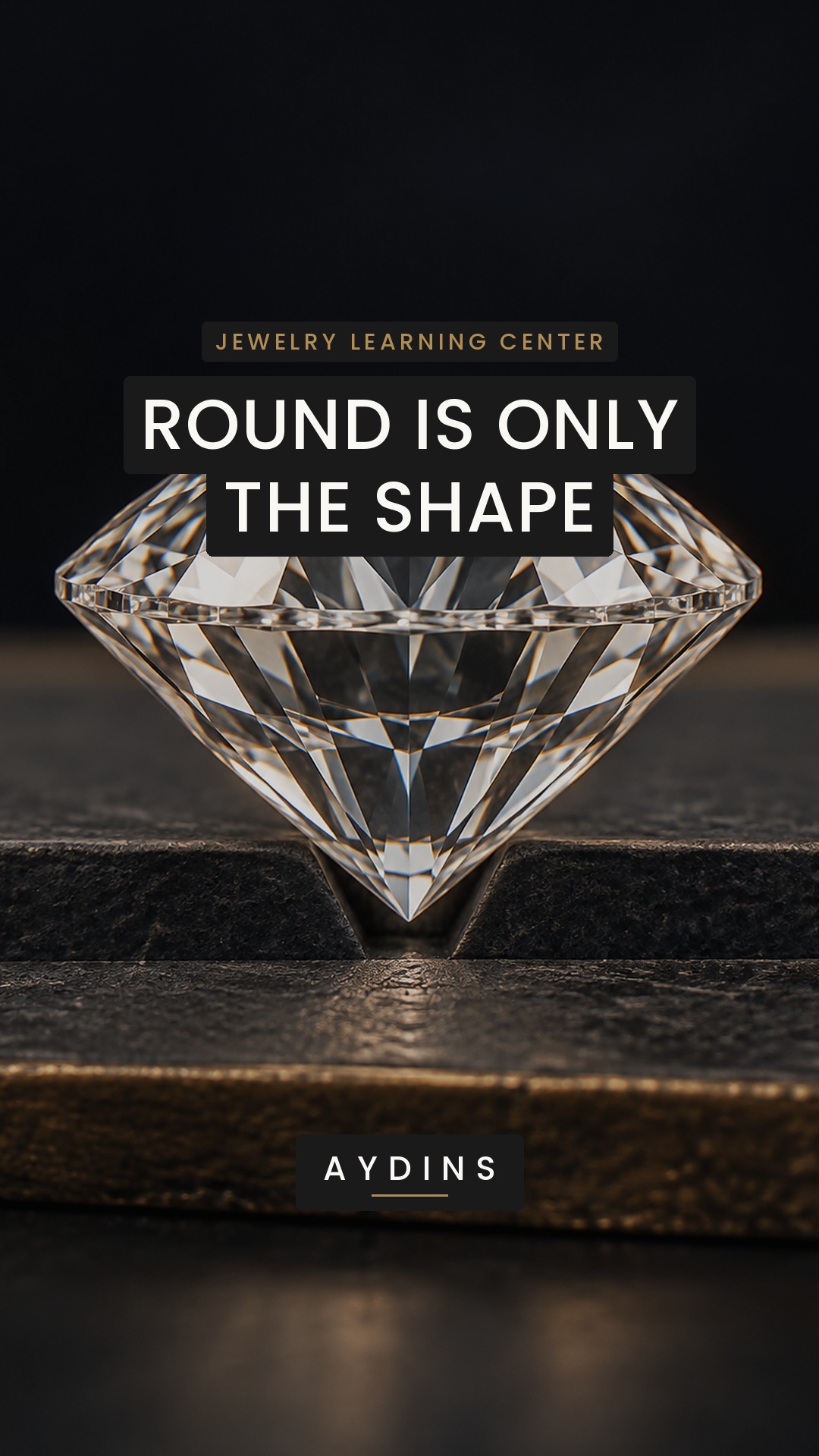
Round is the shape. Cut changes the light.
Shape is a name. Facet angles change where the light goes.
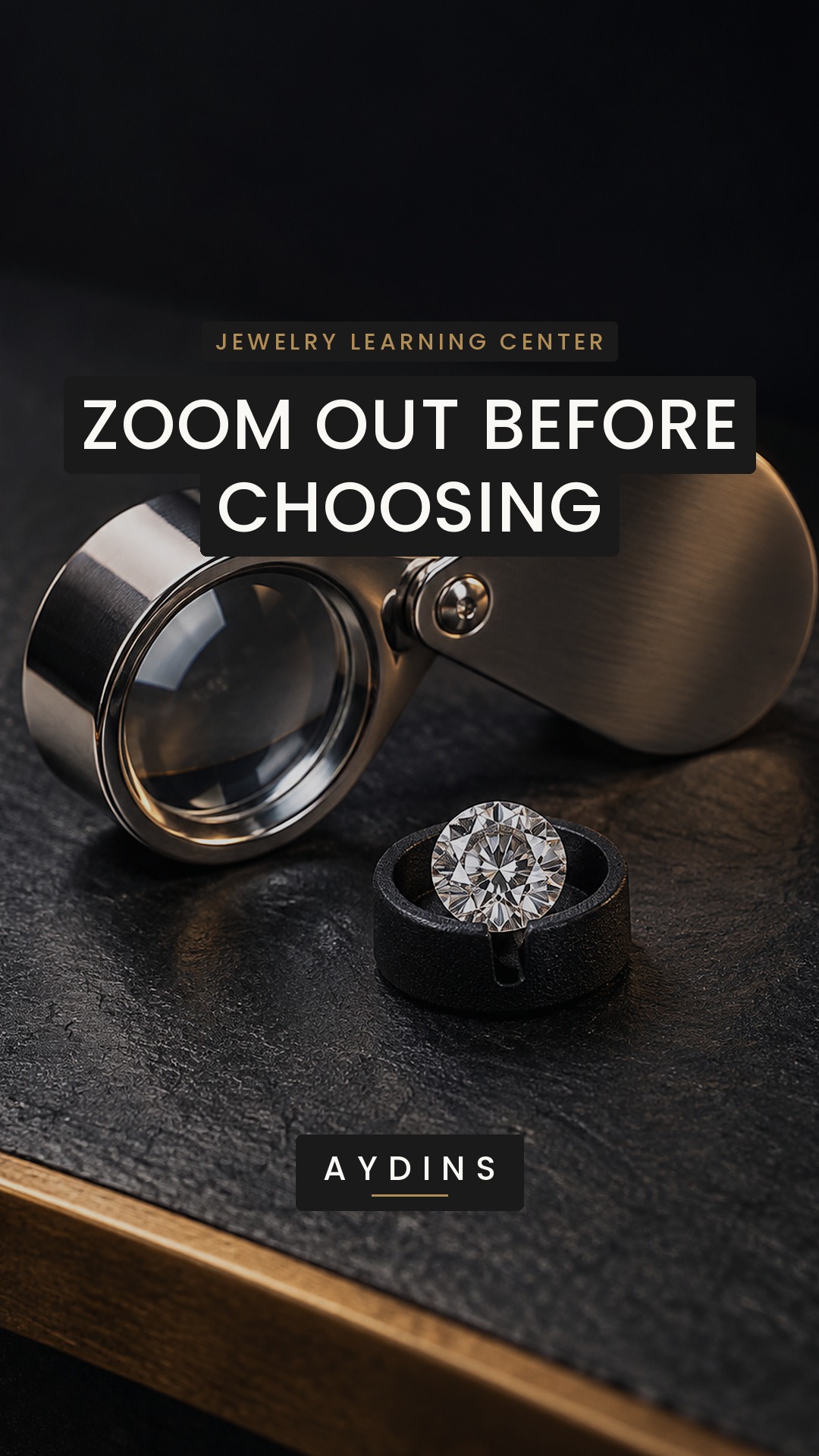
VS versus VVS: zoom out before choosing.
Clarity is graded at 10x. Three checks for what you will notice when it is worn.
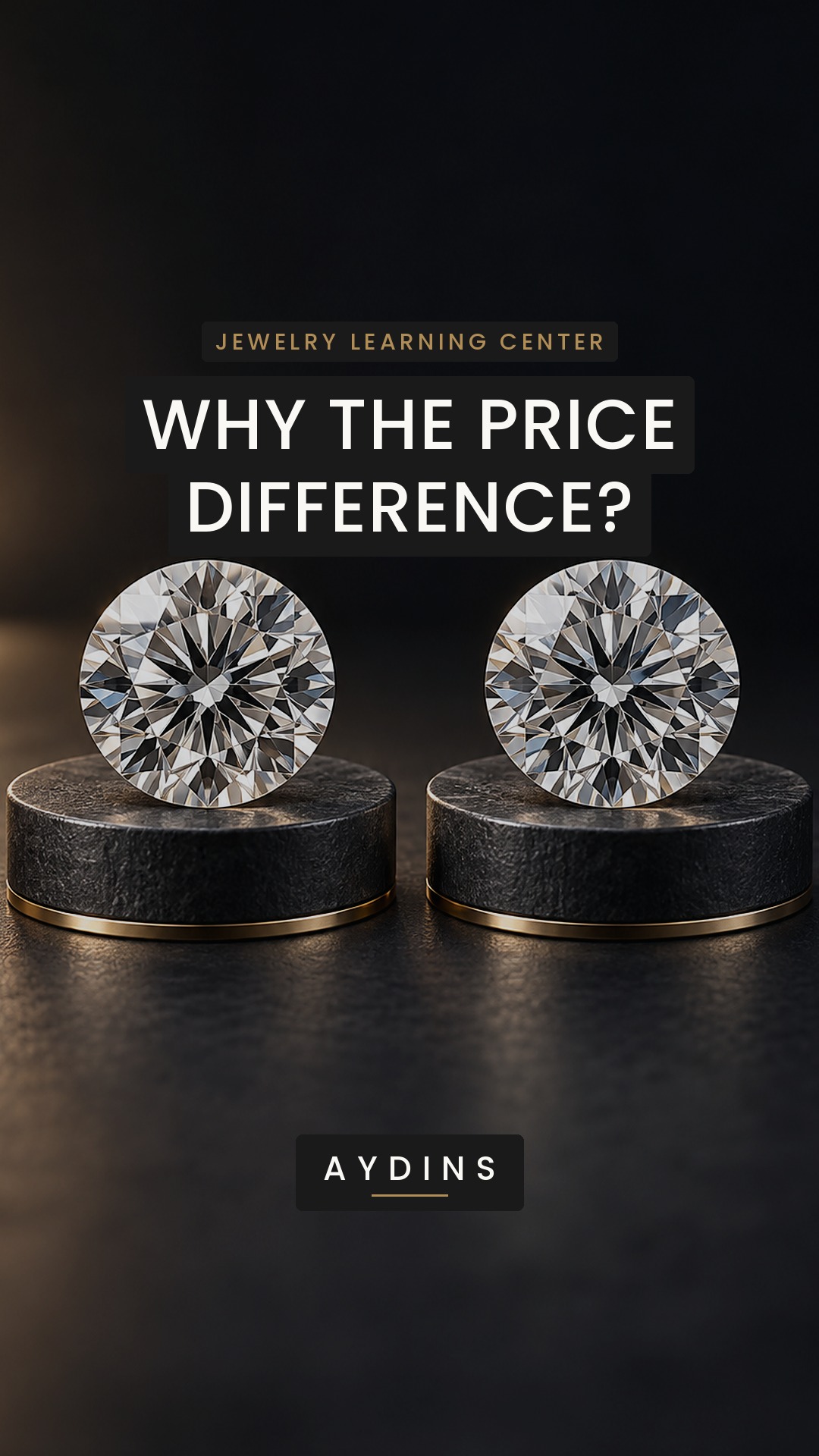
Why lab-grown diamonds can cost less.
Same material, different supply story. How to compare two offers.
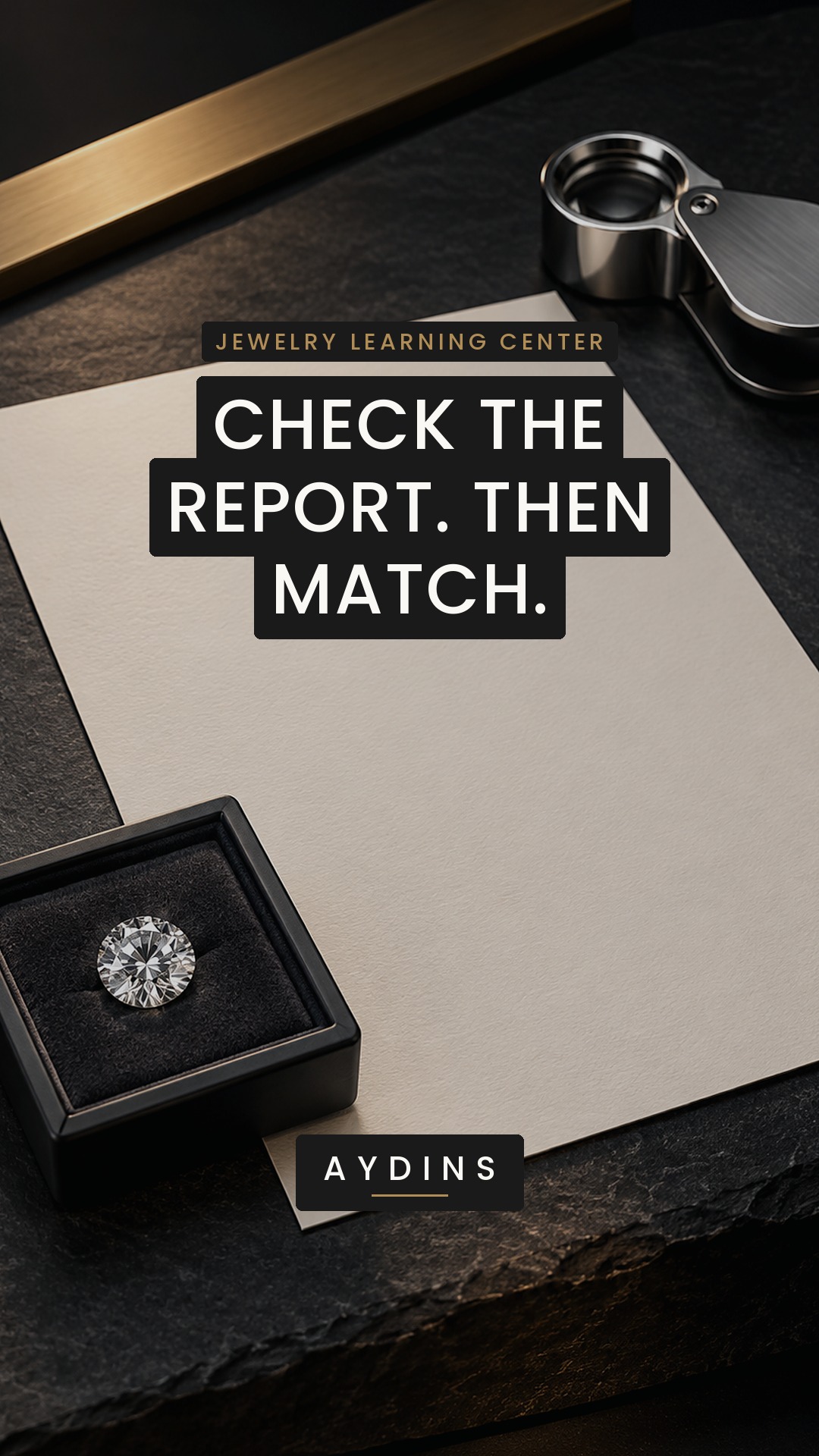
Three checks before trusting a diamond report.
Verify the number, read natural or lab-grown, then match the stone.
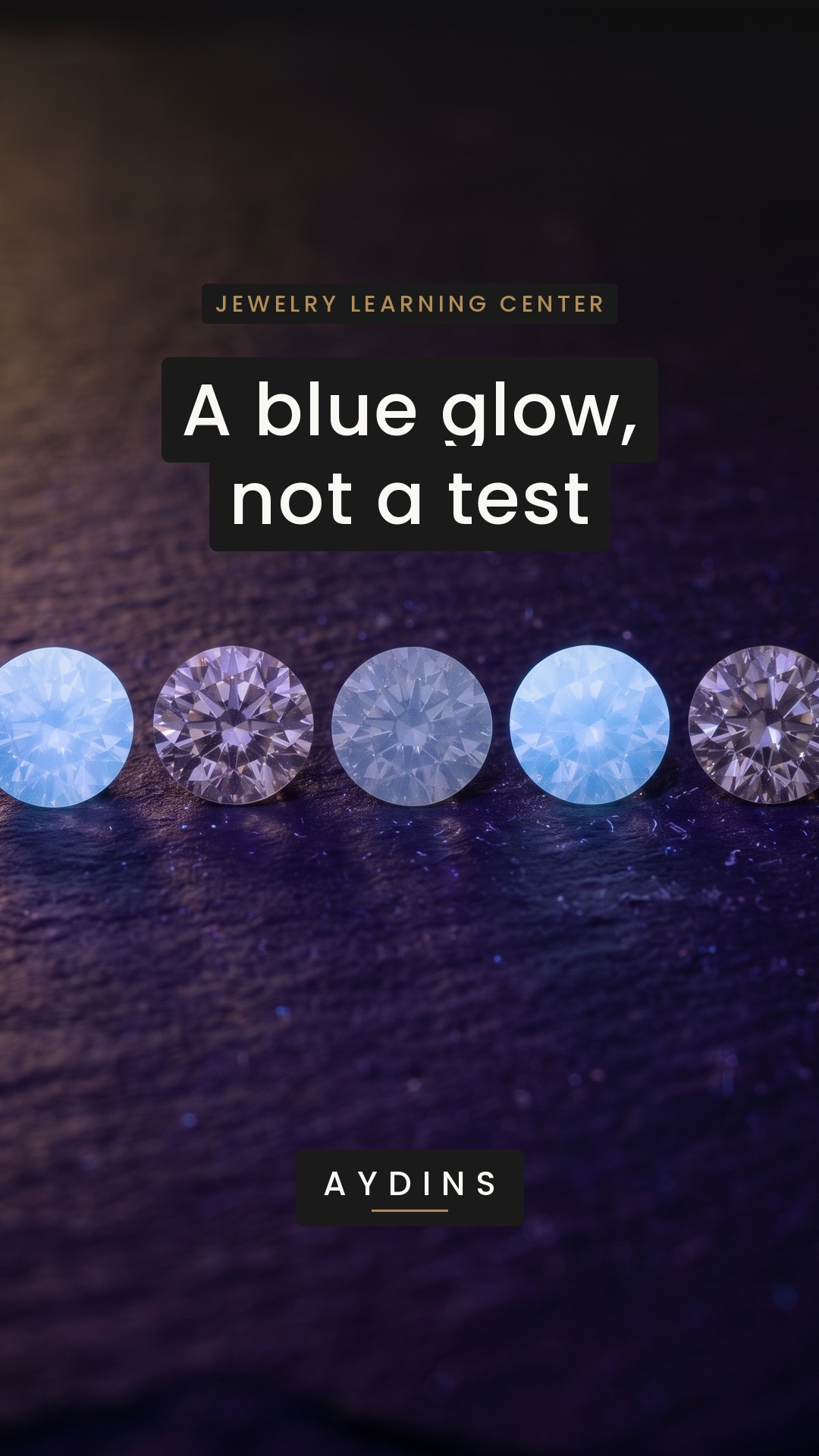
Why some diamonds glow under UV.
Some glow blue, many show none, and the glow stops when the UV is removed. Not a test.
Topic 5 of 5
Gemstones & Earrings
Why opal flashes color as it tilts, why sapphire is not always blue, how mother-of-pearl differs from pearl, and how push and screw earring backs work.
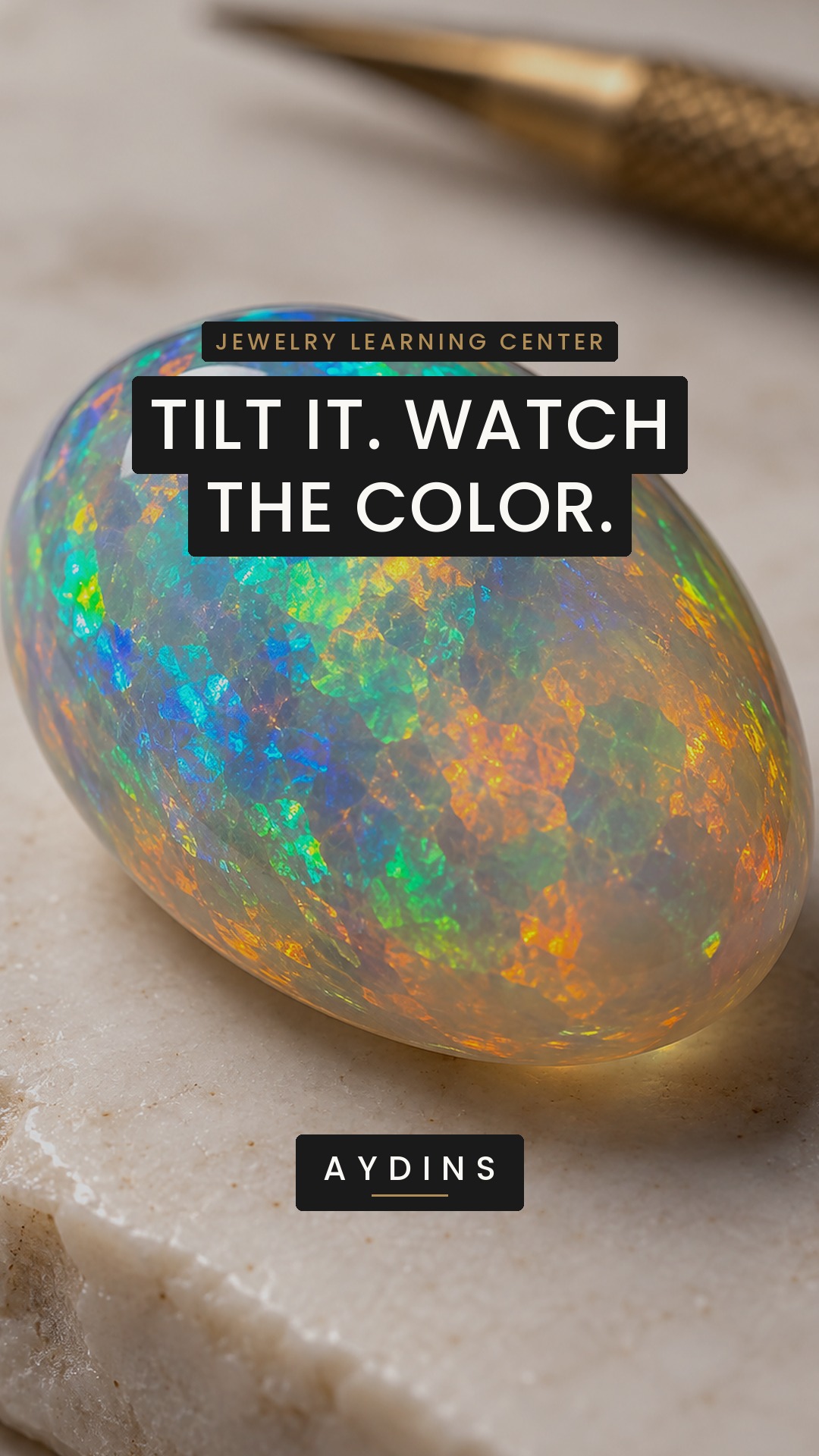
Why opal changes color when you tilt it.
Play-of-color comes from tiny ordered spheres. Common opal does not show it.
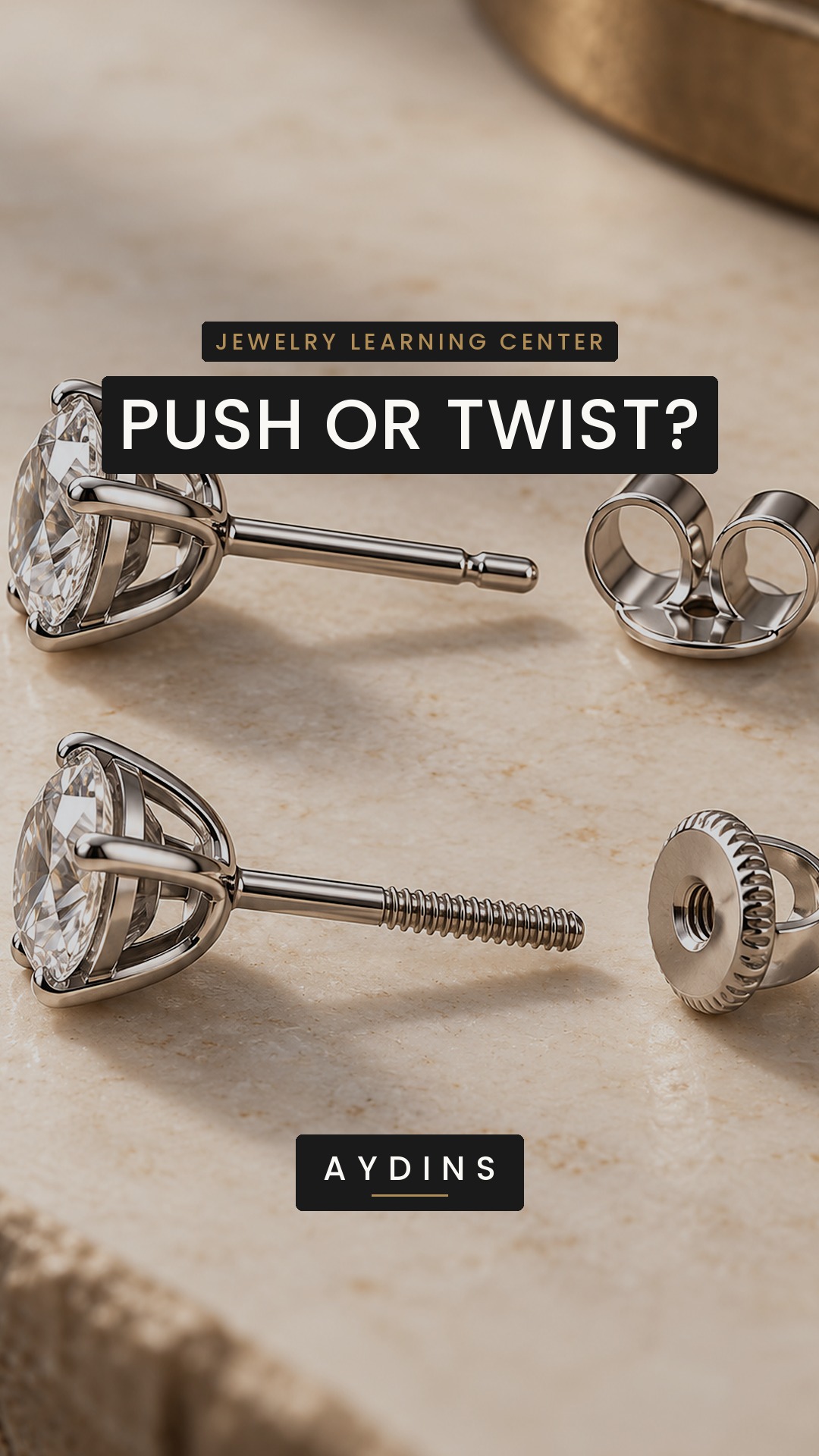
Push backs and screw backs: watch the difference.
One back grips the post, the other follows the threads. Why random swaps are not always a good fit.
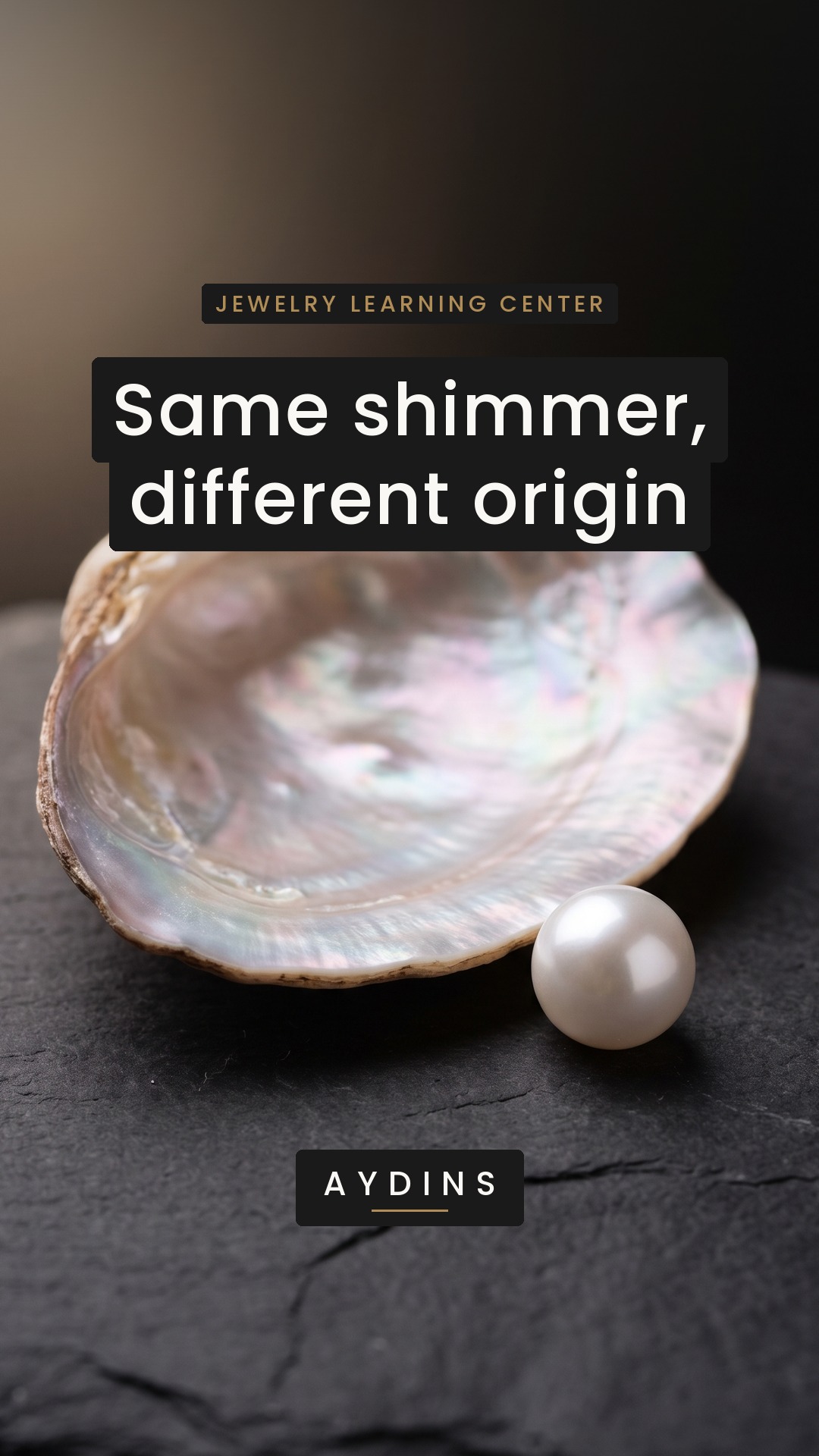
Mother-of-pearl versus pearl.
Both are nacre. One is a shell lining cut thin; the other grows layer by layer.
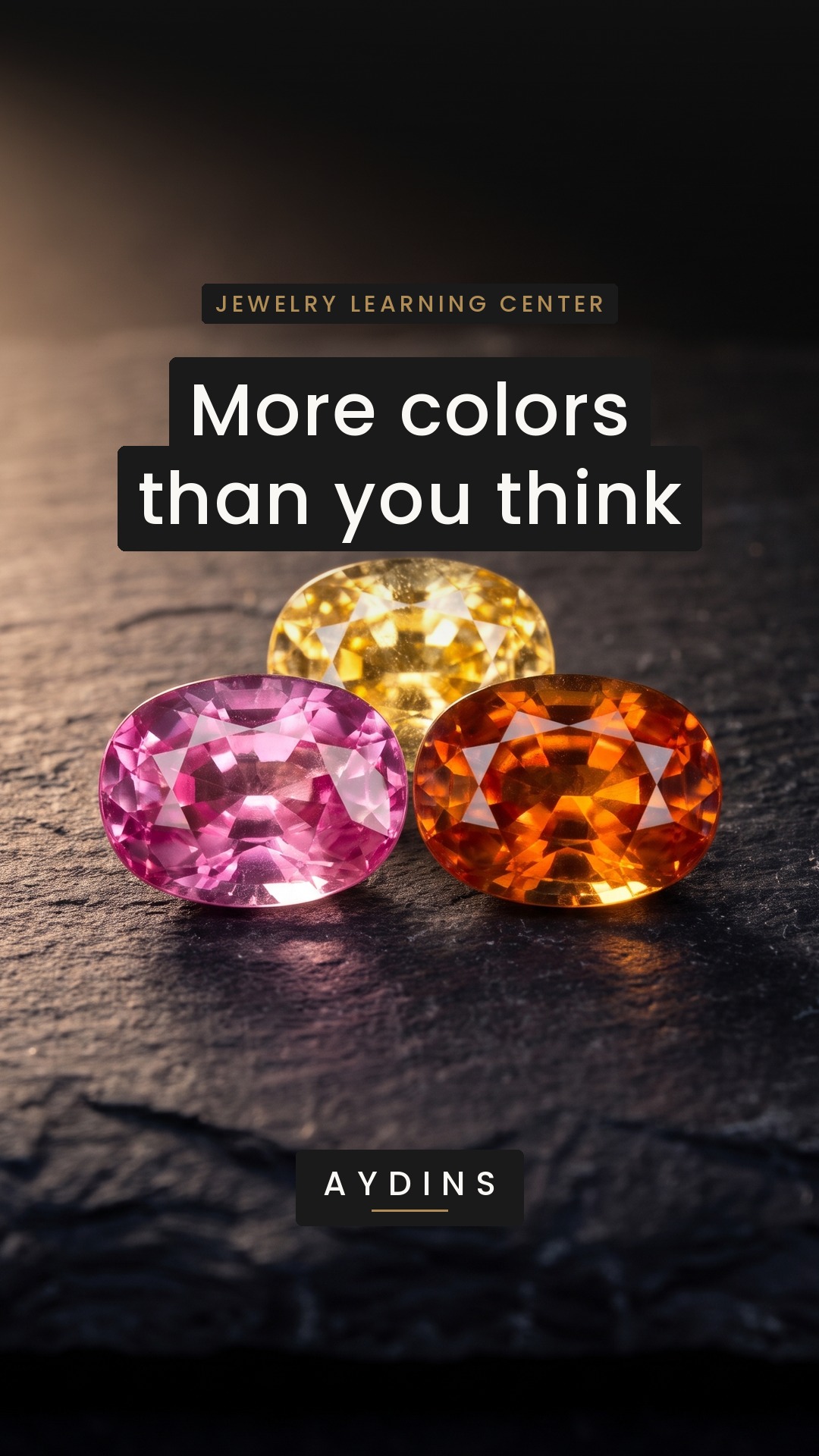
Sapphire is not always blue.
Sapphire is corundum in many colors; red is ruby. Color alone cannot identify a stone.
Ready to shop
Pick where to look next.
If you are picking a band, start with the ring sizer and the men's wedding band collection. If you are shopping lab-grown diamond pieces, start there.